What To Wear And Bring On An Airboat Ride
Airboats are fast, loud, open-air rides across open water, and that combination shapes every clothing and packing decision you make.

Short answer
Wear snug clothing you can secure, a hat that straps on, sunglasses with a retainer, and sunscreen on every exposed inch. Bring water, a light wind layer, and a phone case that zips shut. Operators like Boggy Creek supply hearing protection and life vests for young children, so leave the earplugs and most gear worries behind.
Fitted, secured clothing and a strapped hat cover most of this page. See today's times for the one-hour Boggy Creek ride, the reference tour this whole guide is built around, before you finish packing.
Check Today's Times For The One-Hour Ride → Compare every tour
What To Wear And Bring On An Airboat Ride
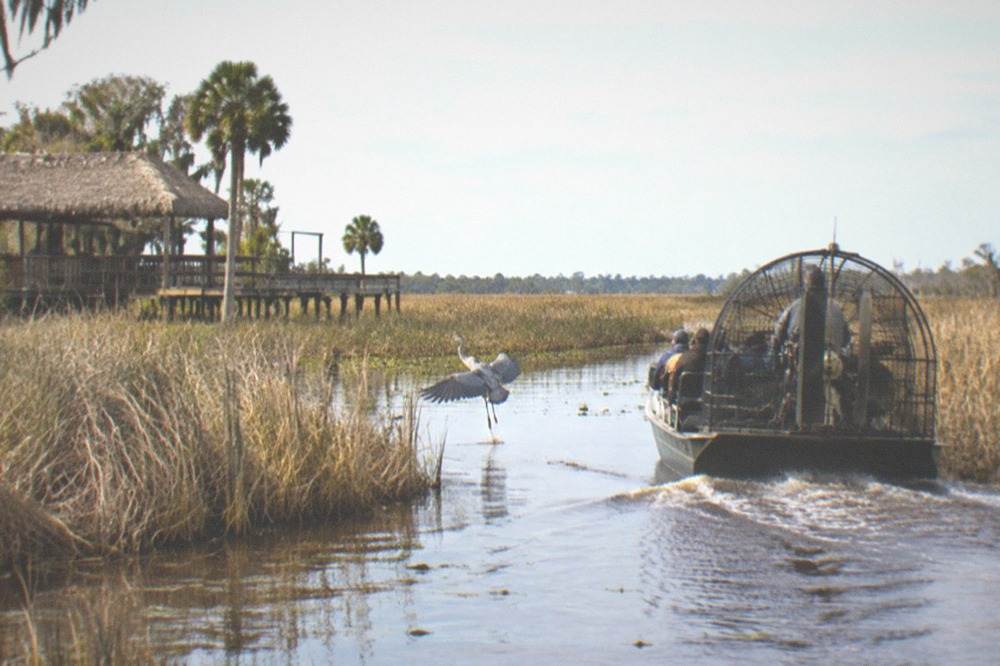
An airboat is a flat-bottomed vessel pushed by an aircraft-style propeller, and it does two things to your body that most Florida activities do not: it throws wind at you at speed, and it runs a loud engine a few feet behind your head. Florida law under Statute 327.391 requires airboats to carry an automotive-style factory muffler, which tames the exhaust note considerably, but the ride is still loud enough that operators hand out hearing protection as standard practice. Every clothing and packing choice on this page flows from those three facts: wind, sun, and noise.
The short version is that you dress like you are going on a fast boat in the tropics, not like you are hiking. Secure everything. A hat that blows off at 40 miles per hour is gone for good, and the marsh does not return sunglasses. The one-hour Boggy Creek Airboat Adventures ride near Orlando is the reference tour for most of this guide because its setup, a dock, an open boat, and supplied ear protection, is typical of the whole roster, but the same principles apply to the longer 90-minute small-group Everglades airboat tour and to park-combo trips like the Wild Florida airboat and gator park package.
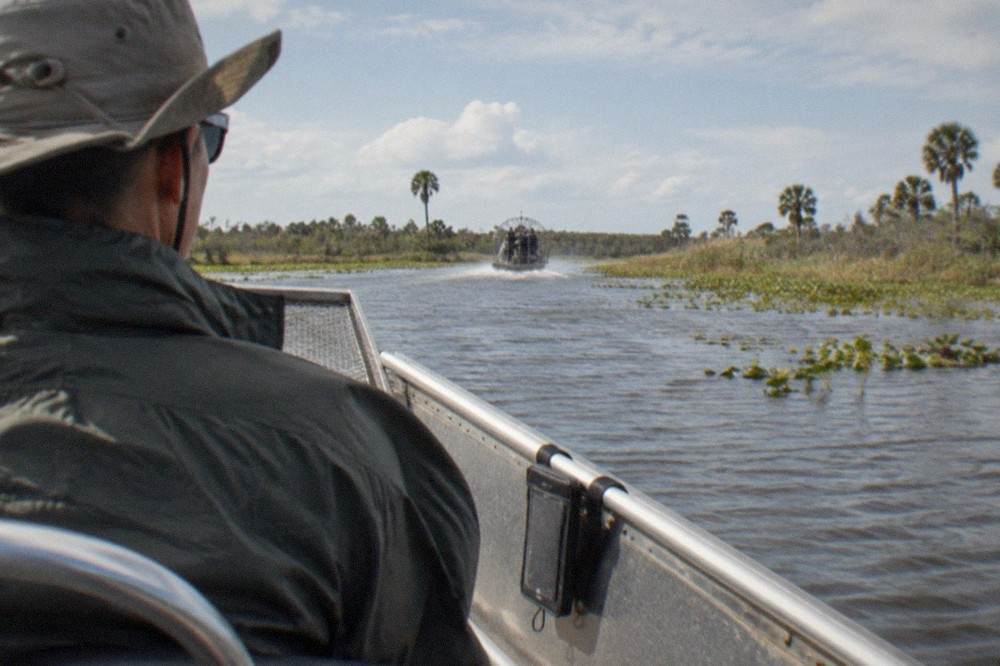
What Should I Bring On An Airboat Ride?
Bring four things that genuinely matter: full sun protection including sunscreen and a strapped hat, a secure way to carry your phone such as a zippered pocket or lanyard case, a sealed water bottle for before and after, and your identification with the booking confirmation. Hearing protection and life vests for young children are supplied by the operator, not carried by you. Cash for a tip is worth having in your pocket, not your bag, and a small sealed bag for keys and wallet solves the last real packing problem, since most boats have no storage, no shade, and nothing to clip a bag to.
Break the list down by what the ride actually does to you. The sun in Central Florida is intense year-round, and an airboat offers no canopy, no roof, and no escape for the duration. On Lake Tohopekaliga routes, glare comes from the water as well as the sky, doubling the angles that hit your face. Your phone is the item most likely to be lost, because people pull it out for photos at speed and a gust or bump takes it. And because these rides run 30 minutes to 90 minutes with no facilities on the water, a bottle of water you leave in the car for afterward is smarter than one you juggle on board.
The item people most regret forgetting is not glamorous: a strap or retainer for their glasses. Every operator on this roster supplies ear protection as their own stated practice, Boggy Creek's one-hour tour listing includes hearing protection and life vests alongside park admission, so earplugs are genuinely optional. Glasses are not optional for people who wear them daily, and an unsecured pair on a fast open boat is a coin flip.
What Should You Wear On An Airboat?
Wear fitted, flexible clothing in quick-drying fabric, closed shoes that stay on your feet, a hat that fastens under the chin or cinches tight enough to survive wind, and wraparound sunglasses on a retainer strap. Layers help if conditions shift, and anything loose can be lost to the wind, so keep every item snug and secure. Loose scarves, dangling sleeves, and unstrapped ball caps are the three mistakes captains see constantly. Long sleeves in a light sun-protective fabric beat sunscreen alone for long summer rides, and a light packable jacket matters more than visitors expect in the cooler half of the year, when the wind does the damage.
The wind question deserves its own explanation, because it is the one that surprises people. A boat moving at speed creates apparent wind, and on a warm day that wind feels pleasant, but in Florida's cooler months, roughly November through April, a 75-degree afternoon can feel like the low 60s or cooler on your face and hands at speed. Riders who show up in shorts and a tank top in January regularly ask whether the boat has a cabin. It does not. A thin windbreaker or fleece layer, something you can stuff in a bag if you get warm, is the single most useful piece of clothing on a winter airboat ride.
Footwear is simpler than people fear. You will not get drenched on a normal ride; spray is occasional and mostly hits those in front rows during turns. Closed walking shoes or sneakers are the safe call, sandals are acceptable, and flip-flops are a bad idea mainly because docks, ramps, and gravel parking areas are unkind to them. If rain is in the forecast, the question of moisture gets bigger, and the honest answer lives in our do you get wet on an airboat ride guide.
| Clothing item | Why it matters on an airboat | Best version of it |
|---|---|---|
| Hat | Sun from above, glare from below, wind at speed | Bucket hat with chin strap, or cap cinched snug |
| Sunglasses | Water glare doubles UV exposure to the eyes | Wraparound pair with a floating retainer strap |
| Top | Long sleeves protect arms for the full ride without reapplying | Light long-sleeve sun shirt |
| Bottoms | You sit on bench seats and climb a few steps to board | Fitted quick-dry pants or shorts |
| Shoes | Dock ramps and wet metal surfaces | Closed sneakers or secure sandals |
| Layer | Wind chill is real from November to April | Packable windbreaker or fleece |
The Wild Florida combo tour is worth a special note on clothing, because the airboat plus gator park admission with optional lunch runs from $37 per person and turns the day into more than a boat ride. You walk the park's boardwalks and animal exhibits after disembarking, which means comfortable walking shoes matter twice as much, and the same sun protection carries over. People who dress only for the boat often regret it by the second hour ashore.
How Do You Keep Hats And Sunglasses From Blowing Off?
The most reliable way is to secure them mechanically instead of hoping for the best: put a chin strap or cinch cord on your hat, attach a retainer strap to your sunglasses, and make sure nothing loose is left anywhere it can catch wind during the ride. Airboats travel fast enough that a standard baseball cap lifts off a head in seconds, and there is no stopping the boat to recover it. Marsh grass and open water swallow dropped items permanently, and every operator's crew will tell you the same thing about retrieval once the item is over the side.
This is the part of airboat prep that has no forgiveness built in. Your captain cannot pause mid-marsh to fish a hat out of the reeds, and even if the boat could stop, the item is usually gone before the engine noise registers. The solution costs a few dollars. A chin strap turns any bucket hat into a secure hat. A neoprene retainer strap, the kind kayakers use, holds glasses on through wind, spray, and the jolts of crossing another boat's wake. These are the two cheapest pieces of airboat equipment you can buy, and they protect the two items people most often lose.
The same principle covers everything else you carry on your body. Zip pockets beat open pockets. A crossbody bag with a zipper beats a tote. Phones belong in a zippered pocket or a lanyard case, and if you plan to shoot photos, do it with the boat slowed or stopped and both hands on the phone. Our page on choosing the best seat on an airboat goes into how seating position changes the wind and spray you eat, which is directly relevant if you wear a hat you love.
| Loose item | Risk on an open airboat | The fix |
|---|---|---|
| Ball cap, no strap | Lifts off at speed, unrecoverable | Chin strap or snug bucket hat |
| Sunglasses, no strap | One gust or bump over open water | Floating retainer strap |
| Phone in hand | Drops during photo taking at speed | Zippered pocket or lanyard case |
| Scarf or loose cover-up | Whips and can catch on rails | Leave it in the car |
| Earrings, dangling | Lost to wind and vest straps | Leave valuable jewelry home |
What Sun Protection Do You Actually Need In Florida?
You need broad-spectrum sunscreen applied before boarding and reapplied if your ride is later in the day, plus physical coverage as backup: a strapped hat, long sleeves, and sunglasses. That combination blocks both direct sun and glare while you are on the water, where shade is limited and reflected rays add to your exposure. Florida's UV index reaches high levels even in winter months, and an open boat on reflective water gives you sun from two directions at once. There is no shade structure on any airboat in this roster, so whatever protection you have when the propeller spins up is the full amount you will get.
The reflection point is the one people underestimate. Water bounces a meaningful share of UV back up at your face and the underside of your chin and jaw, which is why boat and fishing guides in Central Florida wear long sleeves in August. Sun-protective fabric, rated UPF 30 or higher, removes the need to reapply sunscreen to your arms entirely and stays effective when you sweat. On a 90-minute ride, like the small-group 90-minute Everglades airboat tour, that matters, because a ride that long in midday summer sun with no coverage is a genuine burn risk even for people who rarely burn.
Timing also changes the sun problem. Operators consistently recommend morning windows, before roughly 10 or 11 a.m., for both wildlife activity and milder conditions, and our guide to the best time of day for an airboat tour walks through why. An early ride means lower sun angle, cooler air, and less glare, which reduces how much sunscreen heroics you need to perform. A mid-afternoon July ride means you want every physical barrier you can wear. Lip balm with SPF is the small item nearly everyone forgets, and lips burn badly on open water.
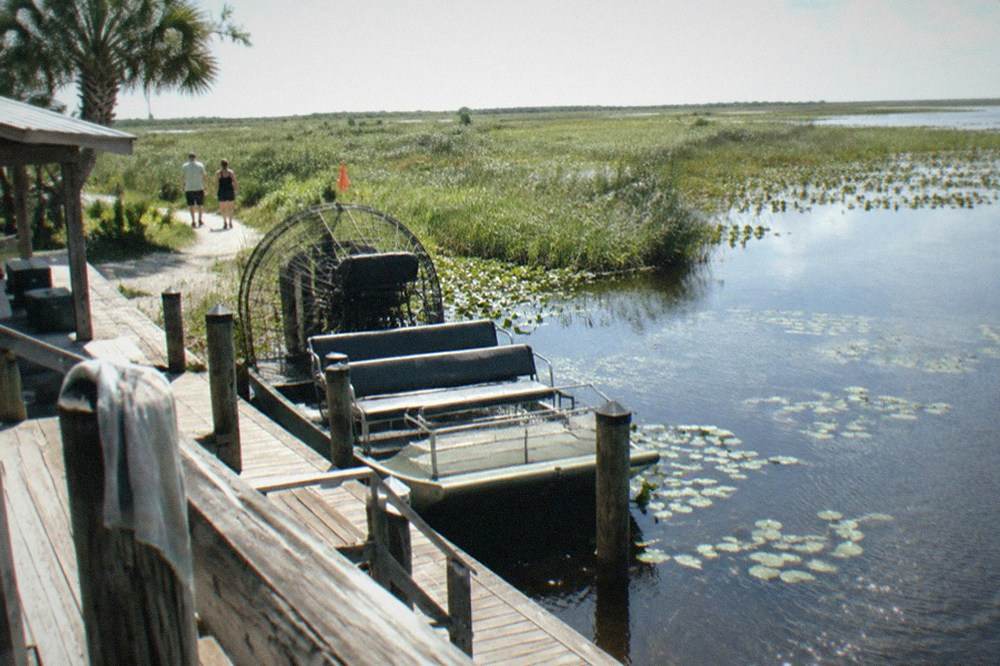
Do You Need Ear Protection And Life Vests?
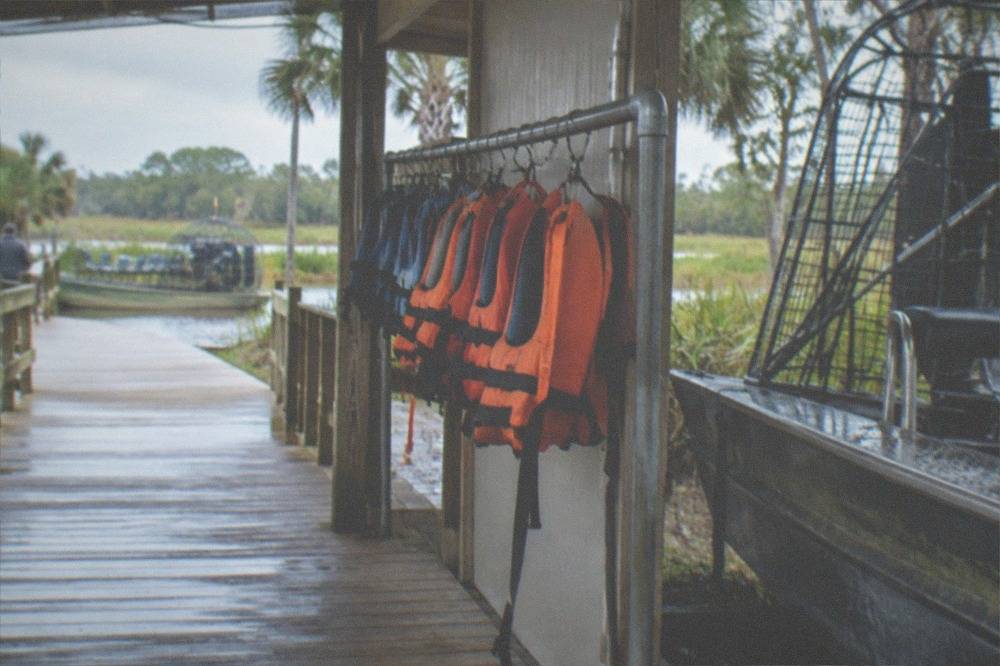
No, you do not need to bring ear protection or a life vest on this trip. Of all the packing questions travelers ask, this one has the clearest answer on the entire page: skip both items entirely and save the space in your bag for things you will actually use. Hearing protection is supplied by the operators on this roster as their standard practice, and life vests are available on board, mandatory for young children per each operator's own policy rather than a statewide rule for adults. Florida law does not require adult passengers to wear ear protection or life jackets on airboats. What the law does require is equipment on the boat itself, not on you.
The legal picture is worth getting exactly right, because a lot of travel content gets it wrong in both directions. Florida's airboat statute mandates a factory-style muffler on every airboat and a mast-mounted international-orange flag, at least 10 inches by 12 inches, flying at least 10 feet above the boat's lowest point and visible from every direction, as the FWC boating regulations page restates in plain language. Nothing in state law tells you, the passenger, what to wear. Everything you hear about mandatory earplugs is operator practice, and good practice at that, but it comes from the company, not the statute.
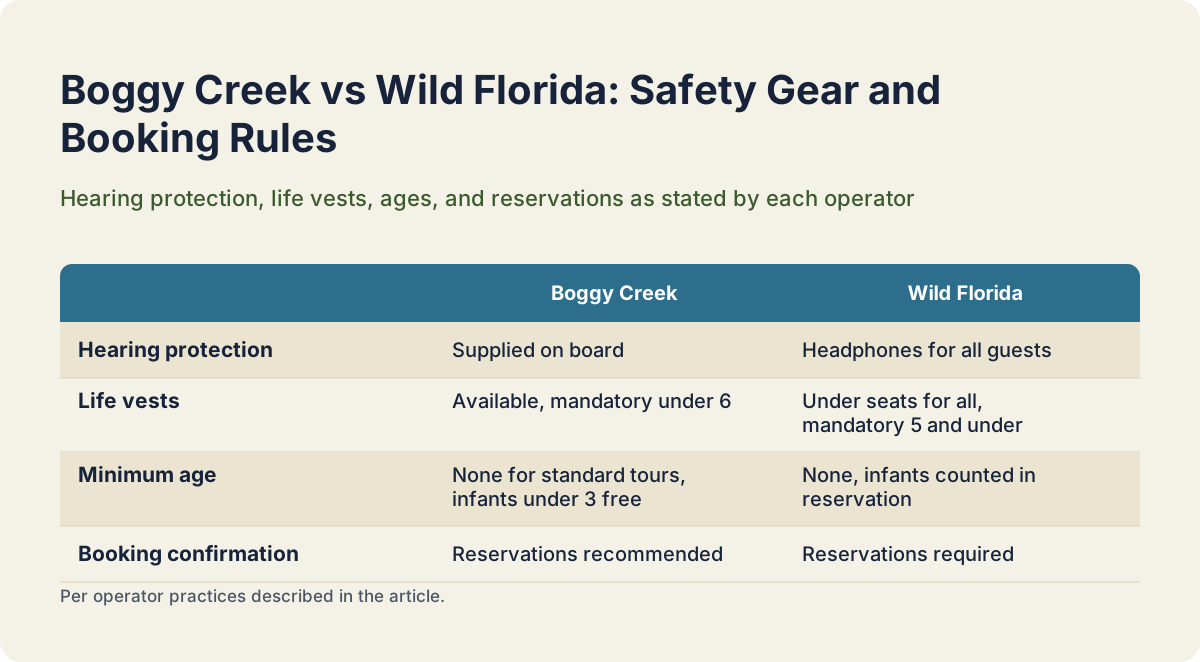
The operator practice is real and consistent across the roster. Boggy Creek's tours include hearing protection and life vests as listed inclusions, with children under 6 required to wear a vest. Wild Florida stocks vests under the seats for everyone, requires them for kids five and under, and hands out ear protection headphones to all guests. On the classic one-hour Boggy Creek airboat tour, the vest fitting happens at the dock before boarding, which is part of why arriving about 30 minutes early is the standard recommendation.
| Operator practice | Boggy Creek | Wild Florida |
|---|---|---|
| Hearing protection | Supplied on board | Headphones for all guests |
| Life vests | Available, mandatory under 6 | Under seats for all, mandatory 5 and under |
| Minimum age | None for standard tours, infants under 3 free | None, infants counted in reservation |
| Booking confirmation | Reservations recommended | Reservations required |
What Should You Wear On An Airboat Ride With Kids?
Dress children in the same secured system as adults, but tightened to child specifications: a hat that straps under the chin, sunglasses with a retainer if they will tolerate them, snug clothing with nothing dangling, and shoes that stay on through climbing and wind. The child-specific items are the supplied life vest, which is fitted by crew at the dock, and a plan for the noise, since young ears and loud engines do not mix well and the supplied ear protection comes in child sizes at the major operators.
The vest rules differ slightly by operator, so know the policy of the company you ride with rather than assuming a statewide rule. At Boggy Creek, there is no minimum age for standard tours and infants under 3 ride free, but any child under 6 must wear a Coast Guard-approved life jacket that the operator provides. Wild Florida makes vests mandatory for kids five and under and requires that infants and toddlers be included in the reservation headcount. None of this is something you pack; it is something you show up a little early to have fitted properly. Our airboat tours with kids guide covers the family logistics in more depth.
Clothing for children follows the same physics as clothing for adults, with less margin for error. A two-year-old cannot tell you their hat is lifting before it is gone, and a loose sunhat on a fast boat is a lost sunhat. Chin straps solve this for a few dollars. Kids also get cold faster than adults in winter wind, so a child who is fine on the dock can be shivering ten minutes into a January ride; pack one more layer for a small child than you pack for yourself, every month of the year.
What Should You Not Wear Or Bring On An Airboat?
Do not wear loose scarves, floppy unstrapped hats, expensive jewelry, or heels on an airboat, and do not bring drones, selfie sticks, umbrellas, or food and drink onto the boat. Loose items can blow off in the wind and engine draft, while open snacks and drinks can attract wildlife or create litter, so leave them behind and keep yourself and the boat safe. The first group gets lost, snagged, or damaged in wind and spray, and the second is against operator rules or plainly unsafe in a moving open boat with a spinning propeller behind the seats. Leave anything you would be upset to lose in the car, including the good sunglasses, because the marsh keeps what it takes.
The umbrella ban surprises people until they picture the physics. An umbrella on a moving open boat is a sail and a spear, and operators will ask you to leave it at the dock. Selfie sticks fail on the same logic: a rigid pole in one hand while the boat crosses a wake is a wrist injury waiting to happen. Drones trip a different wire, since flying one over a commercial tour operation and wildlife areas can violate park rules and, in many protected marshes, federal wildlife regulations. If you want aerial memories, the honest answer is that the operator's own photography or a well-secured phone at low speed is the whole menu.
Food and drink policies are practical rather than fussy. Crumbs and wrappers blow off open boats instantly, feeding wildlife in Florida marshes is prohibited, and a spilled soda on a bench seat is somebody else's afternoon. Water in a sealed bottle is generally tolerated; check with your crew. What you wear matters as much as what you carry here, and the full rain-and-spray picture, including what a storm-scattered ride day does to your outfit plans, is covered in our do you get wet on an airboat ride explainer and in the hurricane season airboat tours guide for summer bookings.
| Item | Bring it or leave it | Reason |
|---|---|---|
| Strapped hat and sunglasses | Bring | Sun and glare, wind at speed |
| Sunscreen and SPF lip balm | Bring | No shade, reflected UV |
| Sealed water bottle | Bring, ask crew | Hydration after the ride |
| Zip-lock bag for keys and phone | Bring | No storage on most boats |
| Umbrella or parasol | Leave | Unsafe in wind on a moving boat |
| Selfie stick | Leave | One-handed poles on a fast boat |
| Food and snacks | Leave | Wrappers blow away, feeding wildlife prohibited |
| Expensive jewelry | Leave | Lost items are not recoverable |
How Should You Pack Differently By Season?
Pack for two distinct seasons: from November through April, bring a wind layer and long pants to handle cooler conditions, while from May through October you should shift to double sun protection, extra water, and a lightweight rain shell to stay comfortable in the heat. Adjusting your kit to match the season keeps you prepared for whatever the trail throws at you. Florida's dry, cooler season makes the wind the main comfort problem, while the wet season makes sun, heat, and afternoon storms the main problems. Wildlife behavior shifts with the seasons too, which changes what time of day you ride and how long you want to stay on the water in each half of the year.
The winter packing logic runs against every instinct people bring from northern climates, so it is worth spelling out. An Orlando January day can hit 75 degrees, and visitors correctly dress light for the dock, then freeze at speed. Cool air moving across open water at boat speed strips heat from exposed skin fast, and alligators bask more readily in cooler months, which is exactly when operators say viewing is more dependable, so you stay out longer than you planned. Fingerless gloves sound absurd in Florida and earn their space on a January ride. The dry season also runs drier water, and in 2026 the Kissimmee chain of lakes has sat meaningfully below its regulation schedule amid the drought conditions the region has faced since a state of emergency was declared in February, which can push routes through narrower, shallower channels where the wind funnels harder.
Summer flips the problem entirely. Heat index above 100 is normal in July and August, afternoon thunderstorms fire almost daily, and sun protection stops being optional. Pack a lightweight rain shell rather than an umbrella, and book morning slots to beat both heat and storms. Operators state plainly that wildlife sightings are never guaranteed in any season, so the honest summer pitch is cooler air, bird activity, and a better ride, not more alligators. The Wild Florida airboat tour with park admission and optional lunch is a good summer structure for exactly this reason: the 30-minute or one-hour ride, then air-conditioned park time, with lunch built in, instead of a long exposure to midday heat on open water.
What Should You Bring For Sunset And Night Rides?
For sunset and night rides, bring the same secured gear you would carry on a daytime ride, plus one added layer for warmth, and insect repellent during the warm months. Avoid anything reflective or dangling, since such items can catch a captain's spotlight and become a distraction or hazard on the water after dark. Sunset and night rides run cooler than daytime trips by several degrees, bugs become a real factor over standing water from spring through fall, and anything that glints or flaps in the dark bothers both wildlife and other passengers. The orange safety flag on the boat's mast is there precisely because darkness makes airboats hard for other boaters to see, so the boat carries the safety gear and you carry the comfort gear.
The temperature drop is consistent and predictable, not a maybe. Sunset in Florida happens quickly, and the 30 to 45 minutes after it are the fastest-cooling window of the day, exactly when a golden-hour ride is on the water. A daytime ride in shorts and a t-shirt feels fine at 5 p.m. and cold by 6:15 p.m. on the same boat. Pack the layer even when the afternoon feels warm; you can always leave the jacket in the car if the crew says the evening is mild. Bug repellent matters more than people expect, because marsh mosquitoes do not care how fast the boat is moving once it slows to view wildlife, and the pause-and-drift moments are when they find you.
Bird activity is the quiet argument for evening rides. Bald eagles, osprey, herons, egrets, wood storks, and roseate spoonbills are all commonly reported around the Lake Tohopekaliga and Boggy Creek marshes, and the eBird checklist for the Lake Tohopekaliga hotspot documents the species list birders actually record there. Golden hour puts many of them in motion, and the ride back in fading light is when herons and egrets move to roost. Night rides add alligator eyeshine, which captains locate with a spotlight; bring nothing that competes with that spotlight, which rules out camera flashes and phone flashlights left on.

What Happens If The Weather Turns On Ride Day?
Weather-cancelled rides are refunded or rescheduled rather than lost, and the two operators state this plainly: Boggy Creek says a cancelled ride is refunded or rescheduled based on your availability, and Wild Florida allows a reschedule or a full refund for a severe-weather cancellation. Standard cancellations follow each operator's own policy, with Wild Florida holding a 24-hour window outside of weather issues. Pack a rain shell, keep your confirmation accessible on your phone, and check the forecast the night before rather than the morning of.
The packing side of storm prep is small but real. A packable rain shell handles the short, sharp showers that pass through Central Florida almost daily in summer; the kind of sustained lightning storm that cancels rides is a stay-inside event, not a dress-for-it event. Wear quick-drying fabrics so a surprise shower does not leave you soggy for the rest of a park day. If your ride is part of a combo, the timing calculus gets easier because the operator is coordinating the whole itinerary, and hotel-pickup products build weather flexibility into the transport.
The safety framing on airboats generally is proportionate, not alarmist. Florida recorded 694 reportable boating accidents with 51 fatalities statewide in 2025 across all vessel types, and commercial tour airboats with inspected vessels and licensed captains represent a small slice of that number. Our can airboats tip over guide covers the actual stability physics of these hulls, and our what to expect on your first airboat tour walkthrough puts the whole ride in sequence, from parking to dock to the moment the propeller spins up. Dress for wind and sun, secure your hat, and the boat does the rest.
The prep work on this page is deliberately short because the operators have done most of it for you. The small-group Florida Everglades airboat tour and the one-hour Boggy Creek ride both supply the safety gear, the captain, and the route; your job is a strapped hat, real sunglasses, sunscreen, and a layer that fits the season. For planning beyond the outfit, Orlando Airboat Tours keeps a full library of ride guides, from pricing to seating to tipping.
Common Questions About What To Wear And Bring On An Airboat Ride
What should I bring on an airboat ride?
Sunscreen, a hat that straps on, sunglasses with a retainer, a sealed water bottle, a zip-lock bag for keys and phone, and your booking confirmation. Ear protection and life vests for young children are supplied by the operator, so they stay off your packing list.
Do I need to bring earplugs for an airboat ride?
No. Operators on this roster supply hearing protection on board as their standard practice, and Florida law does not require adult passengers to wear it. Bring foam earplugs only if you or a child is unusually sensitive to noise and you prefer your own pair.
Should I wear pants or shorts on an airboat?
Either works, but quick-drying fabric wins on every ride. Fitted shorts are fine in summer; light long pants add sun protection for long rides and warmth for winter ones, when wind chill at speed makes an afternoon feel 10 to 15 degrees colder than the dock.
Will my hat blow off on an airboat?
An unstrapped hat almost certainly will. Airboats move fast enough that a standard cap lifts off in seconds, and crews cannot stop mid-marsh to recover it. A chin strap or snug bucket hat solves the problem for a few dollars.
Do airboat rides get cancelled for rain?
Short showers usually mean a delay, not a cancellation. When operators do cancel for severe weather, Boggy Creek refunds or reschedules based on your availability, and Wild Florida offers a reschedule or full refund. Standard non-weather cancellations follow each operator's policy, including a 24-hour window at Wild Florida.
Can I bring a bag or backpack on the airboat?
A small bag is generally fine to leave at the dock or take aboard if the crew allows it, but most boats have no storage and no shade. Keep it minimal, zip everything, and leave anything you would be upset to lose in the car.
Book Your Airboat Tour
Boggy Creek Airboat Adventures One-Hour Airboat Tour near Orlando, Florida
You've read what the operators supply and what you actually need to carry. Check your date on the one-hour Boggy Creek listing now, before you plan the rest of your Kissimmee morning around a departure time that might already be booked.
Or compare:
- Florida Everglades Airboat Tour and Wild Florida Admission with Optional Lunch from $37 per person
- Orlando Airboat Tour with Alligator & Wildlife Viewing from $44 per person