Do You Get Wet On An Airboat Ride In Florida?
A light spray is common on a Florida airboat ride, especially at speed and in another boat's wake, but a full soaking is not typical. Here is what actually gets wet, and how to dress so it never matters.
Short answer
A light spray is common, especially at speed and in wake, but a full soaking is not typical. Riders closest to the bow catch the most mist, and wind or rain adds to it. Operators supply ear protection and life vests, and weather-cancelled rides are refunded or rescheduled. Dress in quick-dry layers and you will be fine.
The 1.5-hour Florida Everglades wildlife tour is the article's own example, long enough to sample every kind of wetness an Orlando ride produces, from barely misted to genuinely damp. See today's times.
Do You Get Wet On An Airboat Ride In Florida?
A light spray is common on a Florida airboat ride, especially at speed and when crossing another boat's wake, but a full soaking is not typical. Most riders finish with damp sleeves, a few misted glasses, and dry shoes. Operator FAQs in the Orlando area answer this question the same way: plan for spray, not for swimming. The variables that change how wet you get are your seat, the boat's speed, the wind, and whether rain is falling, and each of those is easy to manage with the right clothing choices before you board.
The question matters more than it sounds. People show up to Kissimmee launch docks straight from a theme park in cotton shorts and flip flops, then spend an hour in a boat that throws a fine mist at anything in its path. A little planning turns a mildly damp ride into a non-event. This guide breaks down where the water actually comes from, which seats catch the most of it, how the season and the current drought conditions play a role, and what to wear so the answer to "do you get wet" becomes a shrug instead of a story.
The 1.5-hour Florida Everglades wildlife airboat tour from Orlando is a good example to keep in mind throughout this guide: it is long enough that you cross open water, shallow marsh, and channel wake, so it samples every kind of wetness an Orlando-area ride can produce, from barely-misted to genuinely damp.
Do You Get Wet On An Airboat Ride In Florida?
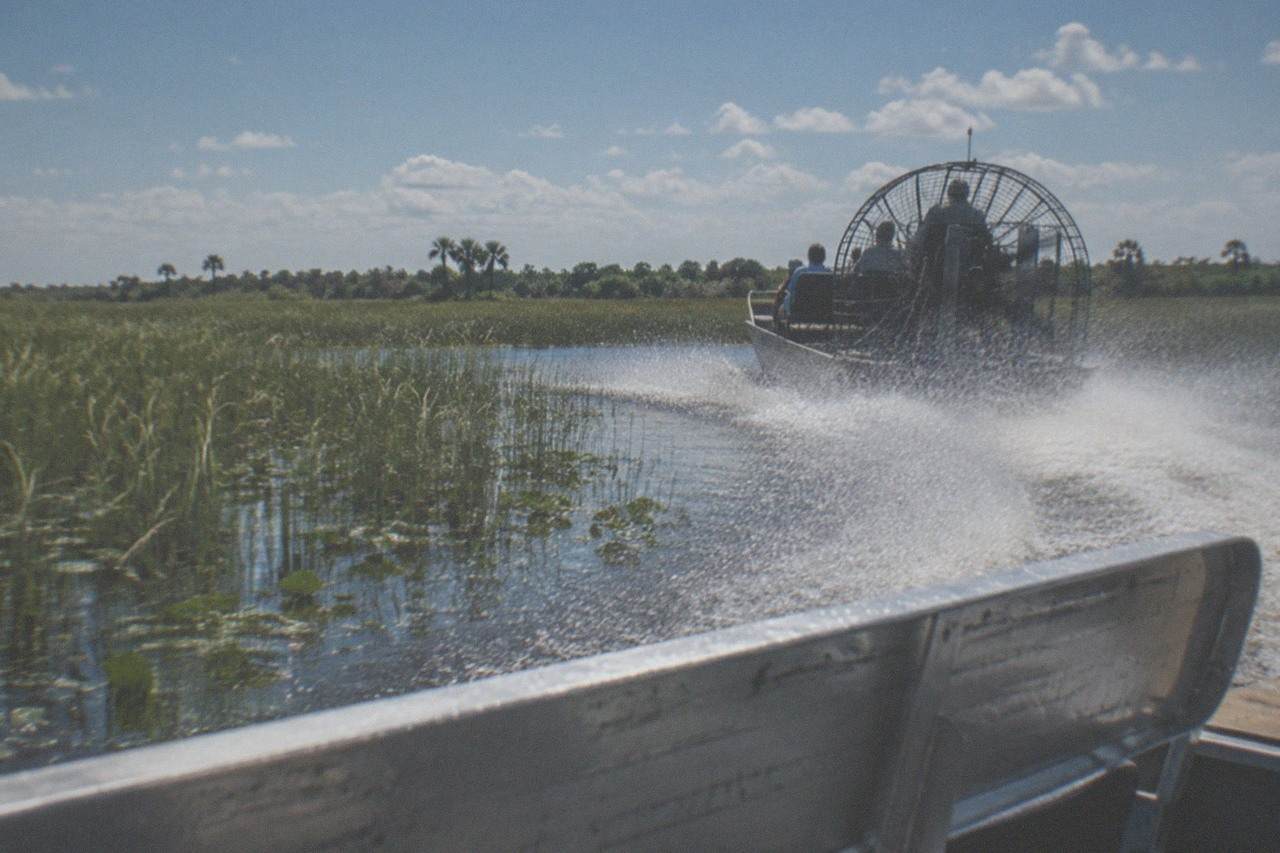
No, not soaked, and yes, a little, and the difference comes down to physics. An airboat's propeller pushes air, not water, so the boat itself barely makes spray, and the wetness you do feel comes from the hull, the wake, and the wind rather than from the engine or a splashing propeller in the water. The wet you feel comes from three sources: the fine forward mist a fast hull throws off its bow, the wake chop when the captain crosses another boat's wash, and whatever the wind carries back onto passengers. Rain, when it happens, is the only thing that soaks you, and rain is also the thing most likely to cancel the ride outright.
That is the honest, boring answer, and it is the one operators themselves give. The FAQ pattern across Central Florida airboat companies is consistent: expect some spray, especially in the front seats, wear clothes that can take a misting, and do not expect to be drenched on a normal run. Nobody on this roster promises you will stay bone dry, and nobody warns you to bring a change of clothes for a standard daytime tour. The reality sits between the two, closer to the dry end.
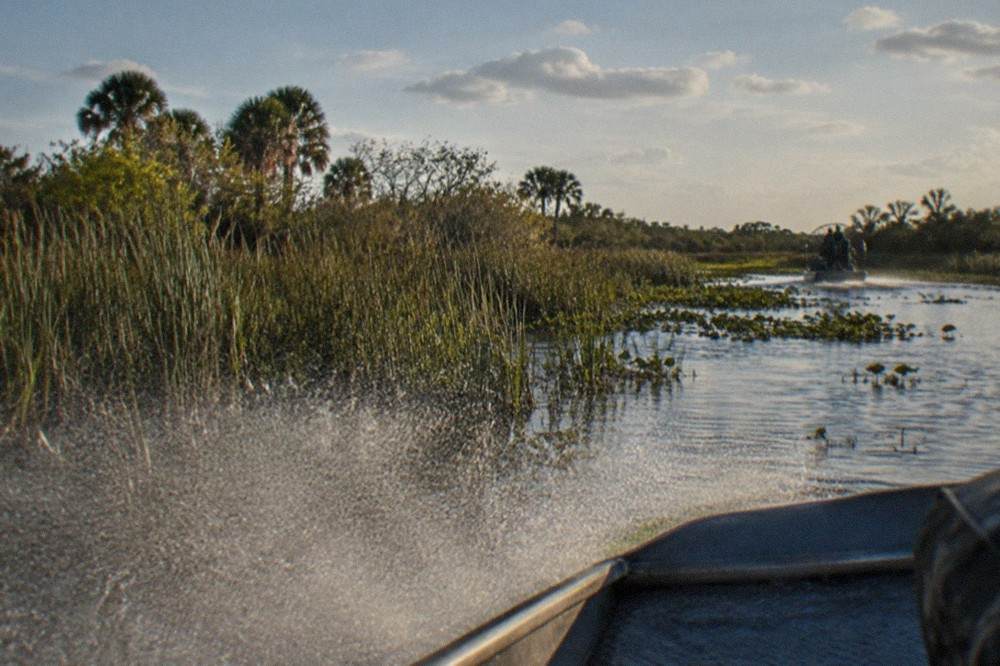
Think of it in categories. A misting is the default: droplets fine enough that you notice them on bare arms and camera lenses. A spray is the upgrade: a band of noticeably wet air that hits when the boat accelerates hard or turns through chop. A soaking is rare and almost always weather-driven: sustained rain, a sustained headwind pushing spray backward, or a ride where the captain deliberately keeps speed up through rough water. On a normal dry afternoon, the first two happen and the third does not.
Speed is the biggest lever the captain controls. Airboats cruise two ways: a slow drift through shallow marsh where wildlife viewing happens, and a faster plane across open water between viewing spots. The drift is essentially dry. The plane is where the mist lives. Riders who hate any wetness at all can ask to be seated toward the back at check-in, and most captains will accommodate that if the boat is not full.
Where The Spray Comes From And Where It Lands
On most boat trips, the spray comes off the bow and the forward-facing surfaces where the hull meets the waves, and it lands heaviest on the bow rows, lighter on the middle rows, and lightest on the stern rows. When the boat runs into a headwind, wind can push mist backward across everyone on board. The hull is the spray source: as the flat bottom rides up on plane, sheets of water slide off the bow sides and break into droplets that the moving air carries forward and up. Where you sit decides how much of that reaches you, and it is the single most controllable wetness variable on any ride.
The geometry is simple. Front-row riders sit lowest and most forward, closest to where the hull meets the water at speed, so they catch the thickest part of the mist cone. Middle rows catch the droplets that hang in the air a second longer. Rear rows, behind the engine cage, sit in a wind shadow and typically stay nearly dry, though they trade that dryness for the loudest engine noise, which is exactly why operators hand out hearing protection at boarding. That trade-off between dry and loud is covered well in our guide to the best place to sit on an airboat, which goes seat by seat.
| Boat position | How wet it typically gets | Why | Who should pick it |
|---|---|---|---|
| Front rows | Mist to light spray on face, arms, chest | Closest to bow wash at speed | Riders who want the view and the photos |
| Middle rows | Light mist, mostly on the windward side | Droplets thin out as they travel | Families balancing view and dryness |
| Rear rows | Nearly dry, occasional drift | Engine cage and hull block the spray | Anyone who dislikes wetness, tolerates noise |
The other spray source is wake, and it is worth understanding because it is the one that surprises people. When an airboat crosses the wash of another boat, the hull slaps through short chop and throws a heavier band of water sideways. This is a few seconds of genuine spray rather than a mist, and it can reach mid-boat. On busy weekend afternoons at popular Kissimmee launch areas, several boats may be running the same open water, so wake crossings happen more often than on a quiet weekday morning.
Wind direction is the last piece. A tailwind pushes the mist forward and away from everyone. A headwind rolls it back over the passenger bench, and on a breezy day that means even rear riders feel a fine dampness on the way out. None of this is soaking-level wet. It is the difference between dry sleeves and damp sleeves, and quick-dry fabric makes it irrelevant.
Does The Season Or Water Level Change How Wet You Get?
Yes, modestly: the dry, cooler months from roughly November through April tend to run calmer and shallower, which means less chop and less wake spray, while the wet season brings afternoon wind, more boat traffic, and briefly heavier spray, though the core answer, spray yes and soaking no, holds in every month of the year. Season changes which clothes make sense and how likely a weather cancellation becomes.
The drought conditions of 2025 and 2026 are a real factor right now. A Florida drought state of emergency was declared in February 2026, and by mid-2026 the Kissimmee chain of lakes was running meaningfully below its regulation schedule, with East Lake Toho roughly 1.4 feet low and Lake Toho roughly 1.0 feet low. Shallower water pushes more routes into narrow, deeper channels and away from open-water runs. The practical effect on wetness is subtle: less open-water planing can mean less of the sustained bow mist, while tighter channels can mean more slow-speed marsh running, which is the driest part of any ride.
Season also changes what you wear on the boat, which is half the wetness battle. A humid July afternoon means quick-dry everything, because mist that lands dries fast and a soaked cotton shirt does not. A January morning means a windbreaker over a warm layer, because the same light spray feels much colder at 60 degrees than at 90. Morning rides, the window before roughly 10 or 11 a.m. that operators most often recommend, also tend to run before the afternoon wind picks up, so they skew drier as well as better for wildlife.
What To Wear So A Little Spray Never Matters
Wear quick-dry layers, a light windbreaker, secured footwear, and nothing you would be upset to mist, and skip cotton entirely: cotton absorbs the spray and holds it against your skin for the rest of the ride, while synthetic fabrics shed the same droplets within minutes and cost nothing extra to choose. The goal is not to stay perfectly dry, it is to make wetness a non-issue, and that is mostly a fabric problem. A packable shell solves the rest.
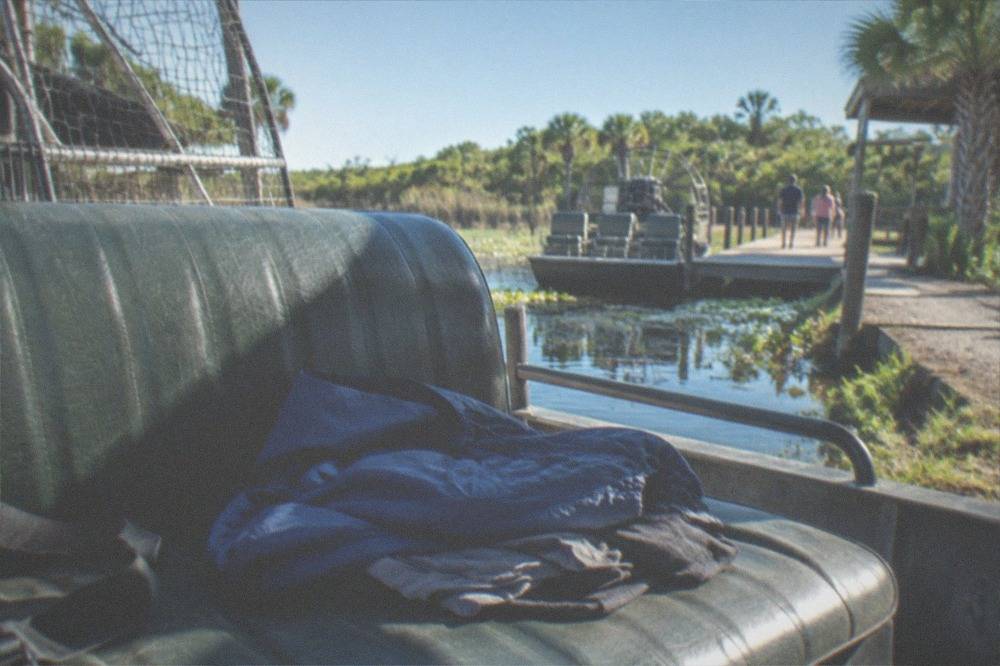
Footwear is where people overthink and underthink at the same time. You do not need water shoes, because you are not wading: boarding happens at a dock, and you step onto the boat's deck, which stays dry in normal conditions. You do need shoes that will not blow off in open-air wind, which rules out loose flip flops at the front rows. A pair of sneakers or secure sandals is the sweet spot. Our full what to wear on an airboat ride guide covers seasonal outfits in more detail, including winter layering.
| Item | Why it matters for spray | Skip if |
|---|---|---|
| Quick-dry synthetic shirt | Mist dries in minutes instead of hours | It is heavy cotton, which stays damp |
| Light packable windbreaker | Blocks bow mist and wind chill entirely | The forecast says hot and still, and you run warm |
| Secure sneakers or sandals | Stays on in open-air wind, keeps feet dry | They are loose flip flops you would mourn |
| Hat with a strap | Keeps mist off glasses, stays on at speed | It is an unstrapped brim hat |
| Zip-lock bag for phones | One wave of spray can streak a camera lens | Your gear is already waterproofed |
Glasses and phones deserve a sentence of their own. A fine mist on eyeglasses is the single most common complaint in guest reviews about wetness, because droplets dry into spots and you spend the ride squinting through them. A strap and a lens cloth fix it. Phones and cameras benefit from a zip-lock bag in a pocket, not because a soaking is coming, but because mist plus wind is enough to streak a lens during the exact photo moment you came for.
Do Night And Sunset Rides Get You Wetter?
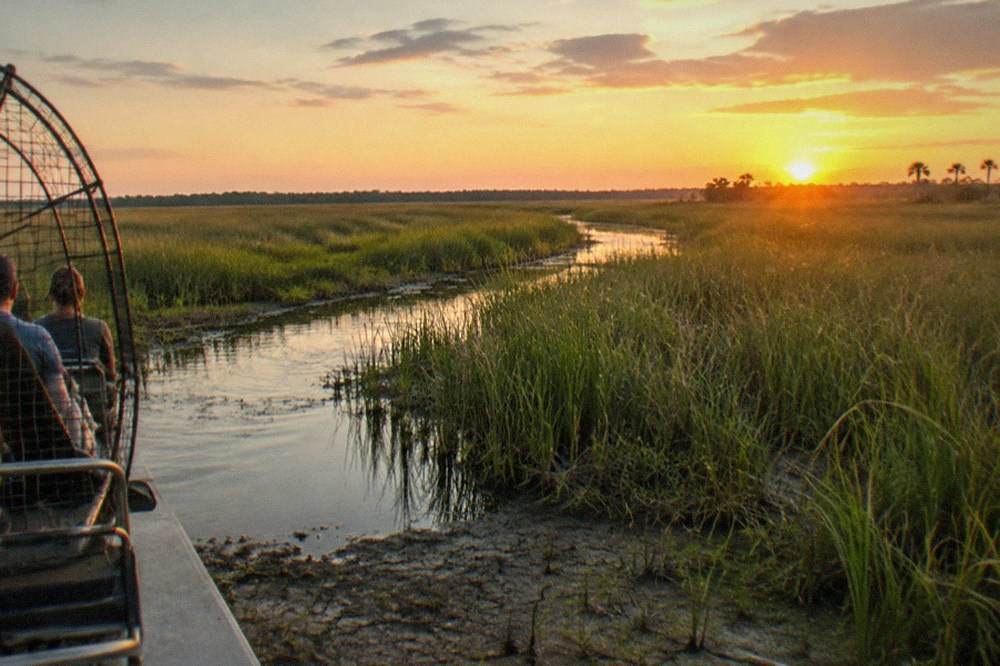
No, night and sunset rides do not get you wetter than daytime rides. Spray behaves the same way after dark, so the same seats and the same fabrics still decide the outcome exactly as they do at midday. The real difference is comfort: any mist you do catch feels noticeably colder once the sun is gone, so what changes is how wetness feels, not how wet you get. Sunset and night runs cover the same water at the same speeds, so the physics does not change. What changes is temperature, and damp fabric at dusk after a warm afternoon is the classic way an unprepared rider ends up shivering by the last quarter of the ride.
Golden hour and after-dark runs also intersect with Florida's weather rhythm. Afternoon storms in the wet season tend to build and either break before evening or push the whole schedule earlier, so a sunset slot can land in the calm, glassy window after a storm clears, which is about as dry as an airboat ride gets. When a storm is still active, that is a cancellation scenario, not a "ride in the rain and get soaked" scenario, and operators treat it that way.
The roster's evening options illustrate the range. The one-hour airboat tour at Boggy Creek near Orlando runs daytime, sunset, and night departures from the same Southport Road launch, so the seat you pick and the layer you bring matter more than the clock. A sunset or night booking in cooler months deserves the windbreaker more than a July one does.
What If Weather Cancels Your Ride?
If weather cancels the ride, you are not out the money: Boggy Creek states a weather-cancelled ride is refunded or rescheduled based on the customer's availability, and Wild Florida allows a reschedule or a full refund for severe-weather cancellations, with a standard 24-hour policy otherwise. Rain itself does not automatically cancel a tour, since a light rain with safe conditions can still run, but lightning, high wind, and severe weather do, and the decision sits with the operator, not the rider.
This is the one place where "getting wet" stops being a comfort question and becomes a money question. A scheduled ride that gets scrubbed is disappointing, but every major operator in this area has a published weather path, and the pattern is consistent: reschedule first, refund if the schedule cannot absorb it. The practical advice is to book morning slots when the forecast is doubtful, keep your phone reachable on the day, and treat the drive to the launch as part of the plan rather than a commitment that locks you in.
| Scenario | What typically happens | What you should do |
|---|---|---|
| Light rain, safe wind | Ride usually runs, you get genuinely wet from rain | Bring the windbreaker or accept the dampness |
| Lightning or severe storms in the area | Ride cancelled or delayed | Watch for the operator's contact, reschedule or refund |
| High wind, no rain | Ride may run with heavier spray than usual | Sit toward the rear, wear the shell |
| Full-day washout | Day's departures cancelled | Take the refund or rebook, operators make this easy |
One more planning note: the launch areas sit far enough from the theme parks that a cancellation discovered on arrival costs you the drive. Boggy Creek's Southport Road launch is roughly 35 minutes from the Walt Disney World area and roughly 30 to 35 minutes from downtown Orlando. If the radar looks ugly, calling ahead before you leave the hotel is the move that saves the trip.
Safety Gear, Spray, And What Operators Actually Supply
Yes, every operator here provides hearing protection on board, and life jackets are available in all sizes. For young children, wearing a life jacket is required under each operator's own policy rather than state law, so expect crew members to enforce those rules during your trip. Florida law governs two things on every airboat: the engine must run an automotive-style factory muffler, and the boat must fly a mast-mounted international-orange flag at least 10 inches by 12 inches at least 10 feet above the boat's lowest point, per Florida Statute 327.391 and the FWC's boating regulations summary. Ear protection and child life vests are operator practice, and the distinction matters when you read marketing copy.
None of this gear is about wetness directly, but it all interacts with it. Hearing protection matters most in the rear rows, the dry rows, because that is where engine noise peaks. Life vests matter least for spray and most for peace of mind with small children aboard. Boggy Creek requires a life jacket for children under 6 on its rides, Wild Florida requires one for children 5 and under, and a small-group 90-minute Everglades airboat tour carries the same per-boat protections in a shared but smaller format. None of these policies get you wetter or drier, they just run alongside the spray question.
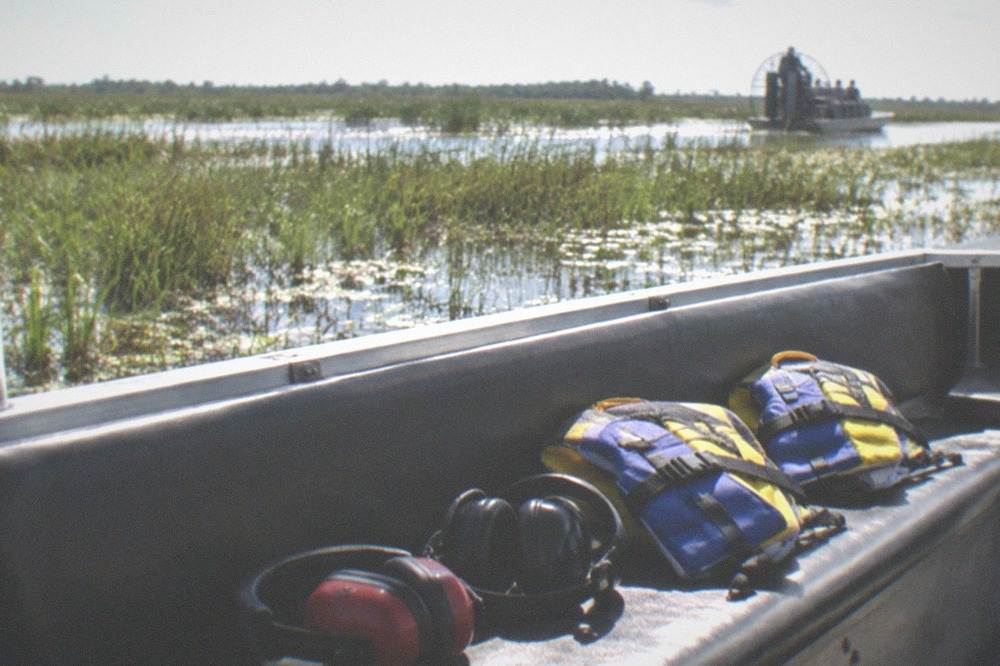
If you want the deeper safety picture, including how airboats handle in chop and what the real incident record looks like, our can airboats tip over safety guide covers it. The short version relevant here: spray is a comfort issue, not a safety issue, and the gear operators hand out addresses the two things that actually carry risk, noise and open water with children.
Choosing A Ride When Wetness Is A Dealbreaker
If staying driest possible is the priority, pick a longer wildlife-focused daytime ride, sit toward the stern, book a morning slot, and go in the cooler months: that combination stacks every dry-favoring factor at once, from lower wind to slower average speeds. If spray sounds fun rather than annoying, do the opposite and sit up front, because the mist is part of the experience and the front rows have the best view of the water and the wildlife ahead of the bow.
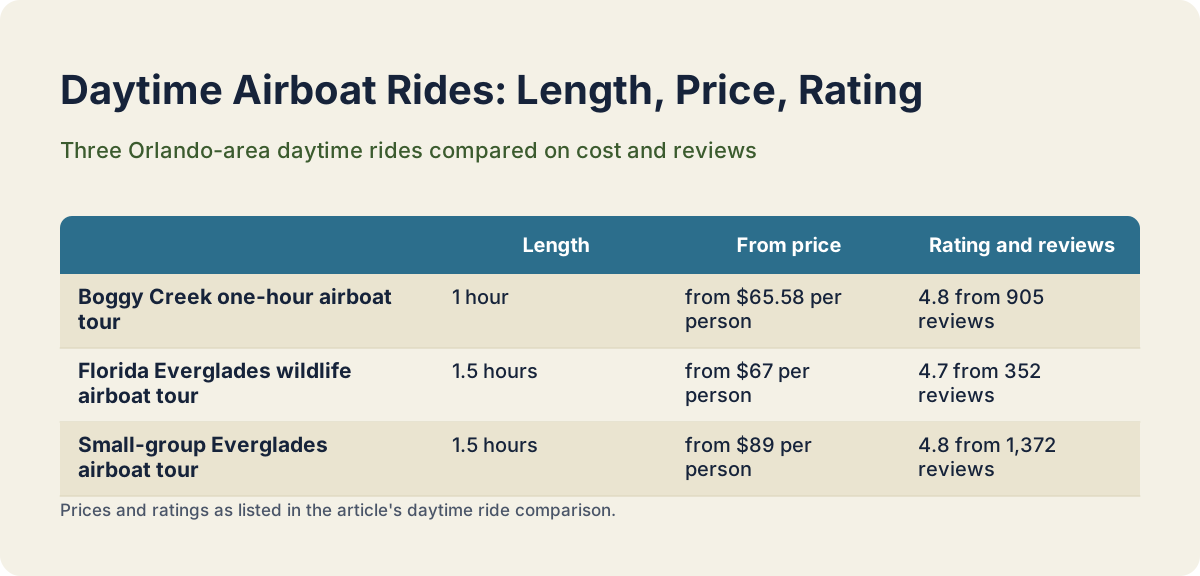
The roster's daytime options make the trade-offs concrete. The Orlando airboat tour with alligator and wildlife viewing style of run is the wildlife-drift-heavy type, which spends more time at marsh speeds and less at full plane, so it skews dry. The Boggy Creek one-hour airboat adventure, at 4.8 from 905 reviews, mixes open-water runs with marsh time, so it samples both wetness modes in a single hour. The small-group Florida Everglades airboat tour, 90 minutes, at 4.8 from 1,372 reviews, from $89 per person, gives the captain room to adjust speed to passenger comfort, which matters when someone in your party is unhappy about getting misted.
| Daytime ride | Length | From price | Rating and reviews | Spray character |
|---|---|---|---|---|
| Boggy Creek one-hour airboat tour | 1 hour | from $65.58 per person | 4.8 from 905 reviews | Open-water planes plus marsh drift, balanced mix |
| Florida Everglades wildlife airboat tour | 1.5 hours | from $67 per person | 4.7 from 352 reviews | Wildlife-drift heavy, leans dry |
| Small-group Everglades airboat tour | 1.5 hours | from $89 per person | 4.8 from 1,372 reviews | Small boat, captain adjusts pace to comfort |
There is no wrong answer here, only mismatched expectations. The rider who gets annoyed is the one who sat up front in a cotton shirt on a windy afternoon with no jacket, not the one who chose any particular tour. Pick the ride for the wildlife and the length you want, then spend five minutes on seat, fabric, and forecast, and the wetness question answers itself.
One last perspective check. The same marsh water that mists your arms holds an estimated 5,716 alligators in Lake Tohopekaliga and around 16,184 in Lake Kissimmee, per FWC harvest data estimates, and supports bald eagles, snail kites, roseate spoonbills, and wood storks, with recent sightings tracked on the eBird checklist for Lake Tohopekaliga. A little damp sleeve buys you a front-row seat to all of that, which is, on balance, an excellent trade. More on what the whole ride feels like is in our airboat tour expectations guide, and the full planning picture, including Orlando Airboat Tours as your starting point, is one click away.
Common Questions About Getting Wet On An Airboat Ride
Do you get wet on an airboat ride in Florida?
A light spray is common, especially at speed and when crossing another boat's wake, but a full soaking is not typical on a normal ride. Most riders finish with damp sleeves and misted glasses rather than wet clothes, and the operator FAQ pattern across Central Florida says the same: plan for spray, not for swimming.
Which seats get the wettest on an airboat?
The front rows catch the most, because they sit closest to the bow wash the hull throws off when the boat planes across open water. Middle rows get a light mist, and rear rows sit in a wind shadow behind the engine cage and usually stay nearly dry, though they get the most engine noise.
Do you need to bring a poncho or rain jacket?
A light packable windbreaker is enough for spray on most days, and it doubles as warmth on cooler morning and evening rides. A poncho helps only if rain is actually falling, since light rain does not automatically cancel a tour, but heavy rain and lightning do, and those conditions end in a refund or reschedule rather than a soaked ride.
Does it get cold when you are wet on an airboat?
It can, especially on sunset, night, and winter morning rides, where a fine spray plus open-air wind chills damp fabric quickly. Quick-dry synthetic layers and a windbreaker solve it completely, and cotton should be avoided because it holds moisture against your skin for the rest of the ride.
Do airboat rides get cancelled for rain?
Light rain does not automatically cancel a ride, but lightning, high wind, and severe weather do. Boggy Creek states a weather-cancelled ride is refunded or rescheduled based on the customer's availability, and Wild Florida allows a reschedule or full refund for severe-weather cancellations, with a standard 24-hour cancellation policy otherwise.
Should you bring a change of clothes on an airboat tour?
For a standard daytime ride, no, because the wetness is a misting rather than a soaking, and quick-dry fabric handles it. A spare shirt in the car is a reasonable precaution for front-row seats on a windy day, for night rides in cooler months, or for anyone riding in sustained rain that has not reached cancellation thresholds.
Book Your Airboat Tour
Orlando: Florida Everglades Wildlife Airboat Tour
You've seen where the spray actually comes from and which seat and fabric choices make it a non-issue. Check today's times on the 1.5-hour Everglades ride now, the one this guide uses to show every kind of wetness in a single trip.
Or compare:
- Boggy Creek Airboat Adventures One-Hour Airboat Tour near Orlando, Florida from $65.58 per person
- Small-Group Florida Everglades Airboat Tour (90 minutes) from $89 per person