Airboat Tours In Florida's Hurricane Season: What To Know
Atlantic hurricane season runs June through November, and it overlaps almost perfectly with Florida's wet season, when airboat routes, wildlife behavior and cancellation odds all shift. Here is what actually happens to an airboat tour when a storm system approaches, what operators promise when weather cancels a ride, and how the 2025-2026 drought changed the water under the boats.
Short answer
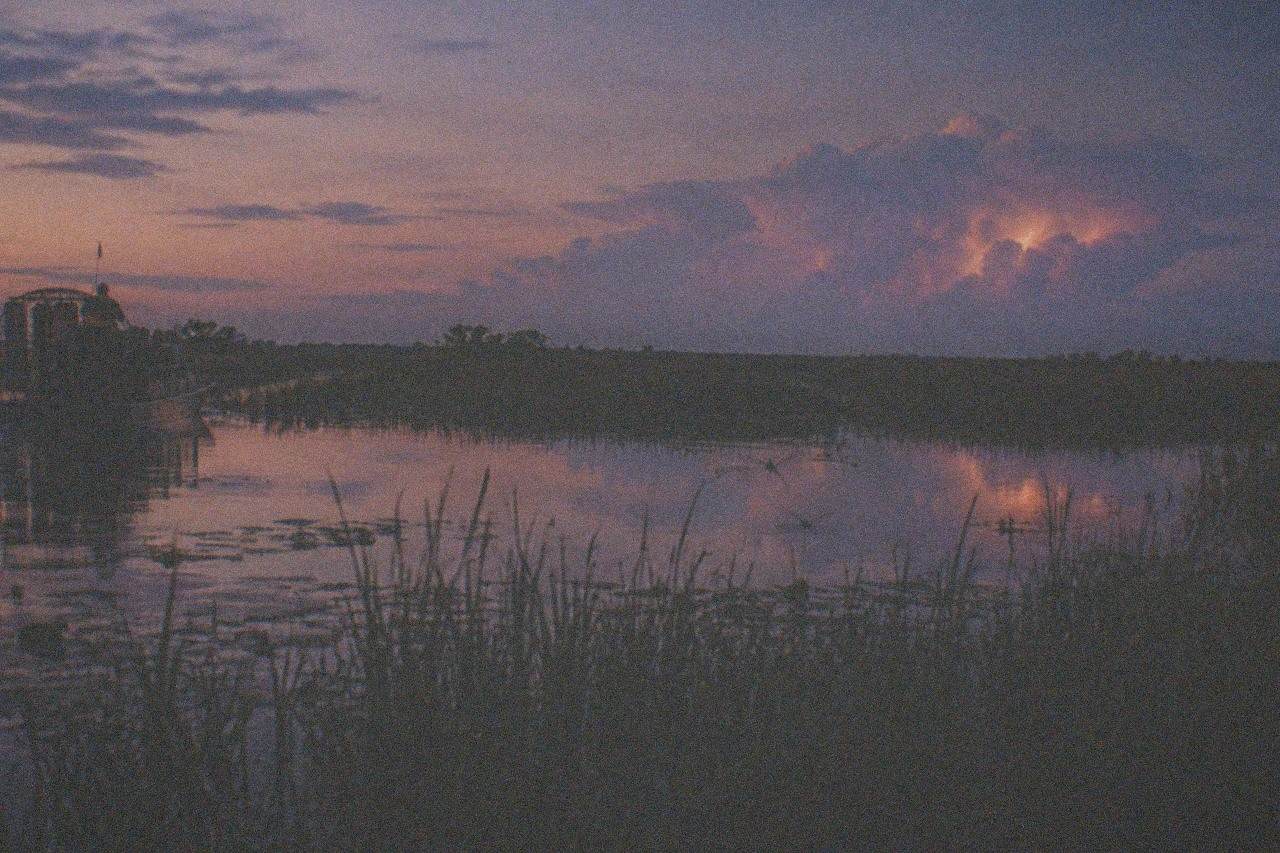
Atlantic hurricane season runs June 1 through November 30, overlapping Florida's wet season. Airboat tours still run through it, and operators cancel only for actual severe weather: Boggy Creek refunds or reschedules weather-cancelled rides, Wild Florida does the same with a standard 24-hour policy otherwise. Drought conditions since early 2026 have left Kissimmee chain lakes below regulation schedule, which can affect shallow marsh routes.
Boggy Creek's one-hour ride is the roster's headline pick for this corridor, and its weather-cancelled rides are refunded or rescheduled based on your availability. See today's times before the afternoon storm window opens.
Check Today's Times Before The Storms Build → Compare every tour
Airboat Tours In Florida's Hurricane Season: What To Know
Florida's hurricane season and its airboat season are the same six months. The Atlantic basin's official storm window opens June 1 and closes November 30, and that stretch is also the state's wet season, when afternoon thunderstorms build almost daily over the Kissimmee chain of lakes and the shallow marshes the boats run through. Tours do not stop for the calendar. Operators run through summer and fall, cancelling individual departures only when real weather makes a ride unsafe, and the busiest airboat corridor in the region, the one stretching from Lake Tohopekaliga down toward Kenansville, keeps selling seats straight through peak storm months. Planning a ride in this window is not a gamble so much as a different calculation: book flexible, watch the forecast, and know exactly what each operator owes you if lightning or a storm system scrub the trip.
The Orlando Airboat Tours roster is built around that corridor, and the headline ride, the one-hour Boggy Creek airboat tour from Kissimmee, departs from 2001 E Southport Rd, roughly 35 minutes from the Walt Disney World area. That drive time matters in storm season, because a system sitting over the theme parks does not always sit over the launch point, and operators make go or no-go calls dockside, not region-wide. This guide lays out the season itself, the honest cancellation terms, the drought-low water levels reshaping routes, and the practical choices that make a wet-season ride work.
When Does Hurricane Season Actually Run In Florida?
The Atlantic hurricane season runs June 1 through November 30, with the statistical peak of activity in early to mid-September. Florida's wet season overlaps almost exactly, running roughly May through October, so the two patterns stack: steady afternoon thunderstorms plus occasional named tropical systems. For airboat planning, the practical consequence is that summer bookings carry a higher chance of a same-day delay or reschedule than dry-season ones.
Those windows are set by the National Hurricane Center's calendar, not by Florida law, and they describe basin-wide storm formation, not day-to-day weather at any given dock. A season can be busy and still leave Central Florida untouched, and a quiet season can still deliver the wettest September on record locally. The distinction matters for anyone booking an airboat ride three months out. The probability that a named storm disrupts a specific afternoon tour on a specific date is low, but the probability that an ordinary afternoon thunderstorm delays it in August is very real, which is why flexible booking matters more in summer than any forecast you read at purchase time.
For Central Florida specifically, the geography works in the visitor's favor slightly. Orlando and Kissimmee sit inland, 40 or more miles from either coast, so tropical systems arriving from the Gulf or the Atlantic have usually weakened below hurricane strength by the time they reach the lakes. The realistic summer disruption here is not a Category 3 storm. It is the daily convective cycle: heat builds through late morning, thunderheads form after noon, and the ride either beats the build-up or waits it out. That is why the 90-minute Florida Everglades wildlife airboat tour and every other daytime option on the roster get the same recurring advice: book the morning slot.
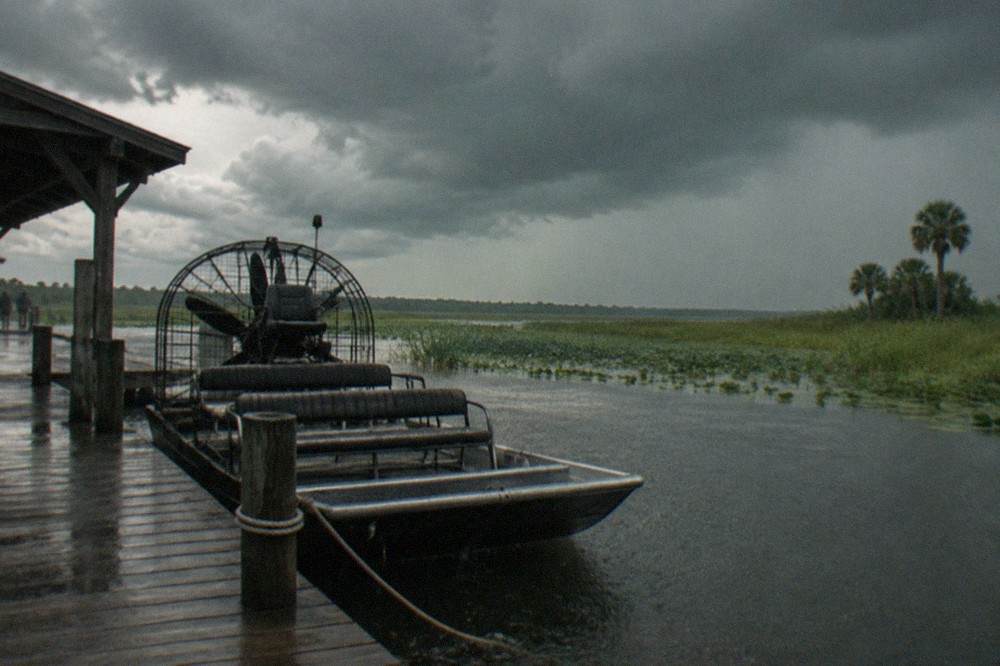
The season's shape also interacts with the wildlife calendar. Early wet season, May through June, is before alligator nesting peaks; July through September is nesting, when gators spend more time submerged or shaded and behave defensively near nests. If your storm-season booking doubles as a wildlife trip, the calculus is not just weather versus clear skies. It is heat, water depth, nesting behavior and storm odds stacked together. The dry months from November through April remain the more reliable viewing window, and November is an interesting month because it sits in both seasons: the hurricane window technically still open, the cooler air already arriving.
Do Airboat Tours Run During Hurricane Season?
Yes, airboat tours run throughout hurricane season, including June through November. Operators cancel individual departures for lightning, severe weather and actual storm impacts, not for the season label itself, and on any given storm-free summer day the boats launch on schedule. Summer is genuinely operational: the same tours sold in February are sold in August, just with a higher chance of a delay or a dockside weather call.
There is no seasonal shutdown in the Kissimmee corridor. The launch points, Boggy Creek's Southport Road dock, Wild Florida's Lake Cypress Road park in Kenansville, the smaller operators up and down the chain, run daily calendars through the wet months. What changes is variance. A February afternoon has maybe one plausible weather threat; an August afternoon has several. Captains watch radar, hold departures when cells sit on the route, and resume when they pass, sometimes within the hour.
The distinction between a thunderstorm hold and a tropical system is worth understanding before you book. A pop-up storm cell is a delay. A named system with a forecast track across Central Florida is a closure, usually a day or two ahead, when operators pause operations for sustained winds and heavy rain. In between sits the ordinary summer reality: humid mornings, building cloud, a decision at the dock about whether the route is safe for the next 60 or 90 minutes. Visitors sometimes assume operators cancel eagerly to keep deposits. The documented policies say the opposite, and both major operators in this corridor put their terms in writing.
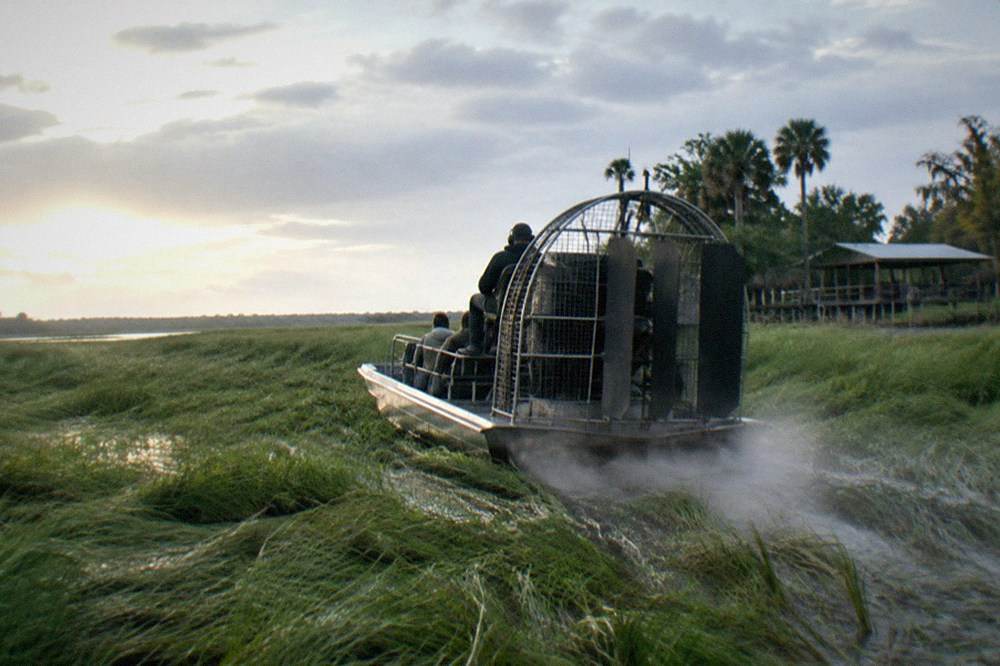
A useful reference point is the state's own regulatory framework for these boats. Florida Statute 327.391 requires every airboat on state waters to run an automotive-style factory muffler and to fly a mast-mounted international-orange flag, at least 10 inches by 12 inches, at least 10 feet above the boat's lowest point, visible from every direction, as the official statute text sets out. That flag exists for visibility, and the equipment rules matter more, not less, in degraded weather. Operators who run commercially in this state operate inside a framework of U.S. Coast Guard inspection for commercial vessels plus these specific airboat rules, summarized in plain language on the Florida Fish and Wildlife Conservation Commission's boating regulations page. Storm season does not suspend any of it.
For choosing a ride with weather variance in mind, the Wild Florida airboat tour with park admission and optional lunch is a smart hedge: the ticket includes entry to the gator park, so a delayed or shortened boat ride does not erase the day. At $37 per person to start, it is also the lowest entry price on the whole roster, backed by 2,790 reviews at 4.8, which matters when you are booking something whose weather risk you cannot control.
What Happens If Weather Cancels Your Airboat Tour?
Boggy Creek states that any ride cancelled due to weather is refunded or rescheduled based on the customer's availability. Wild Florida allows a reschedule or a full refund for severe-weather cancellations, with a standard 24-hour cancellation policy otherwise. In both cases the weather carve-out is the operator's own published term, so keep the confirmation handy and rebook rather than eating the loss when a storm scrubs a departure.
These are the two policies that matter in this corridor, and they are quoted from each operator's own materials rather than inferred. The practical difference between them is the non-weather case. If you simply change your mind 12 hours before a Wild Florida departure, the standard 24-hour policy applies and the refund is not automatic. If the operator cancels because a squall line sits on the lake, you get the reschedule or the money back. Read the terms on the live listing before booking any summer departure, because the precise wording of the carve-out is the thing you are relying on.
| Operator | Weather cancellation | Non-weather cancellation | Notes |
|---|---|---|---|
| Boggy Creek | Refunded or rescheduled based on customer's availability | Standard booking terms | Ramps reach the dock; free on-site parking |
| Wild Florida | Reschedule or full refund for severe weather | Standard 24-hour policy | Reservations required; free parking at 3301 Lake Cypress Rd |
| Gray Line tours | Determined per tour | Varies by product | Hotel pickup included; no fixed meeting point |
A few habits make the weather clause work for you instead of against you. Book with a card that does not punish you either way, keep the booking reference accessible on your phone rather than in a hotel-room email, and when a storm approaches, contact the operator early rather than waiting for them to reach you. Reschedule availability moves fast after a storm day, because everyone whose departure was scrubbed is now competing for the same clear-weather slots, and the flexible traveler who calls first usually gets the first reopening.
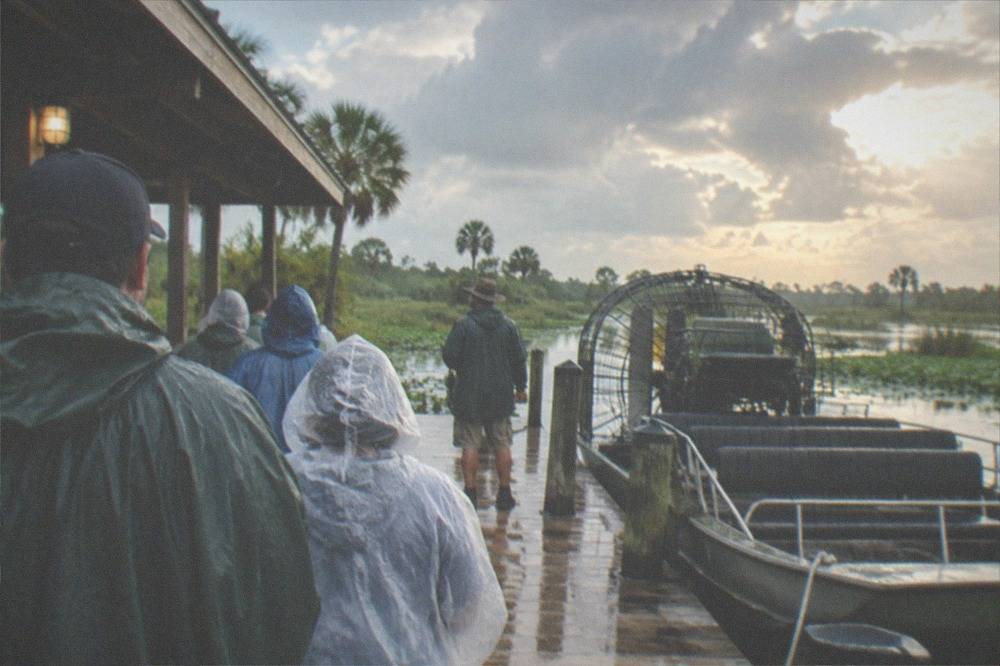
Lightning deserves its own mention, because it is the most common summer cancellation trigger and the least understood. Airboats are open vessels in open marsh, often the tallest moving thing on the water, and the 10-foot orange flag mast that Florida law requires makes that literal. No competent captain launches into active lightning within the route's distance. If you are on the dock when a hold is called, the hold is the safety system working. The same logic explains why morning departures get recommended so consistently in summer: they finish before the daily convection builds, and they avoid the afternoon storm window entirely.
It also pays to remember the drive when a storm threatens. The Southport Road launch sits roughly 30 miles and 40 minutes from Orlando International Airport, and roughly 25 miles from downtown Orlando. A system sitting over the airport can be gone from the marsh, or vice versa. Check radar over the launch point, not over your hotel, before assuming the day is lost.
How Has The 2025-2026 Drought Changed The Water Under The Boats?
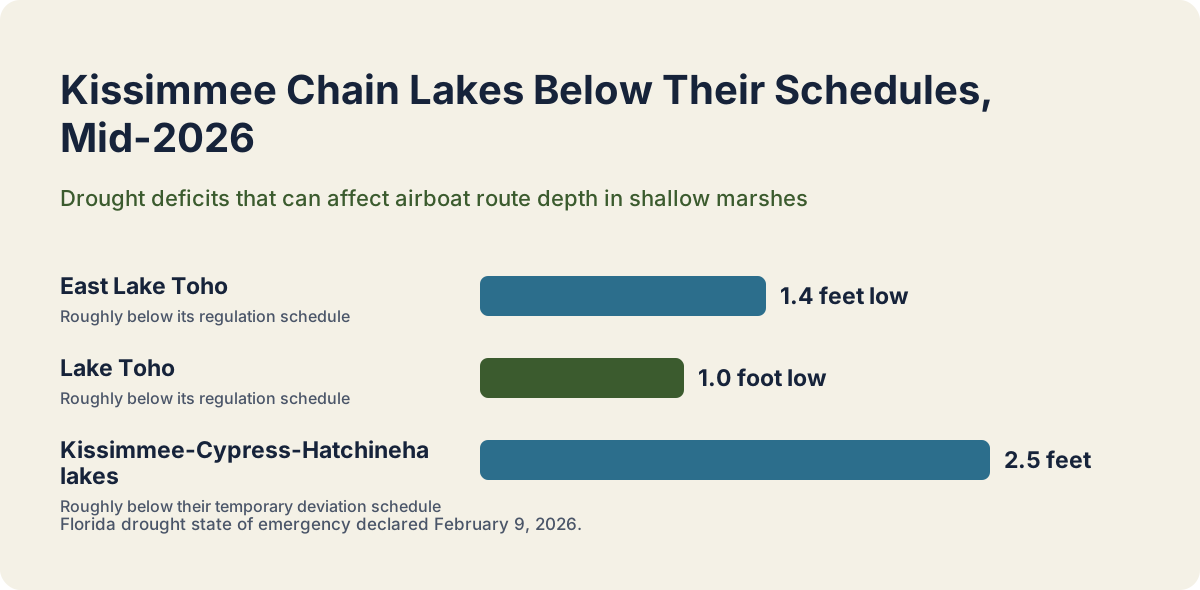
A Florida drought state of emergency was declared on February 9, 2026, and by mid-2026 the Kissimmee chain of lakes ran meaningfully below their regulation schedules: East Lake Toho roughly 1.4 feet low, Lake Toho roughly 1.0 foot low, and the Kissimmee-Cypress-Hatchineha lakes roughly 2.5 feet below their temporary deviation schedule. That low water can affect route depth in shallower marshes, though operators have not published route-by-route impact details.
This is the layer of storm-season planning that first-page search results almost never surface, and it matters in a way that goes beyond the weather a given afternoon. Hurricane season and drought are not opposites in Florida's water cycle; the wet season is what refills the chain, and when it underdelivers, the deficits carry forward. Water managers track each lake against its regulation schedule, a target level that balances flood control, water supply and ecology, and the 2026 numbers show the chain running well short of those targets heading into the back half of the storm season.
| Lake or zone | Condition mid-2026 | What it means for airboats |
|---|---|---|
| East Lake Toho | Roughly 1.4 ft below regulation schedule | Less water in connecting shallows |
| Lake Tohopekaliga | Roughly 1.0 ft below regulation schedule | Main-lake routes generally fine |
| Kissimmee-Cypress-Hatchineha | Roughly 2.5 ft below deviation schedule | Shallow marsh runs most affected |
| Lake Kissimmee | Estimated 16,184 alligators | Second-highest count among Florida lakes |
The reason airboats are unusually drought-tolerant is the design of the boat itself. An airboat rides on a flat or slightly V-bottomed hull pushed by an aircraft propeller, with no submerged drive and no draft requirement beyond a few inches. Conventional outboard craft need enough water to float a lower unit; an airboat needs enough to slide over. That is why these tours run in the shallowest parts of the Everglades system in the first place, and why a foot of deficit that strands other vessels often just narrows the route options.
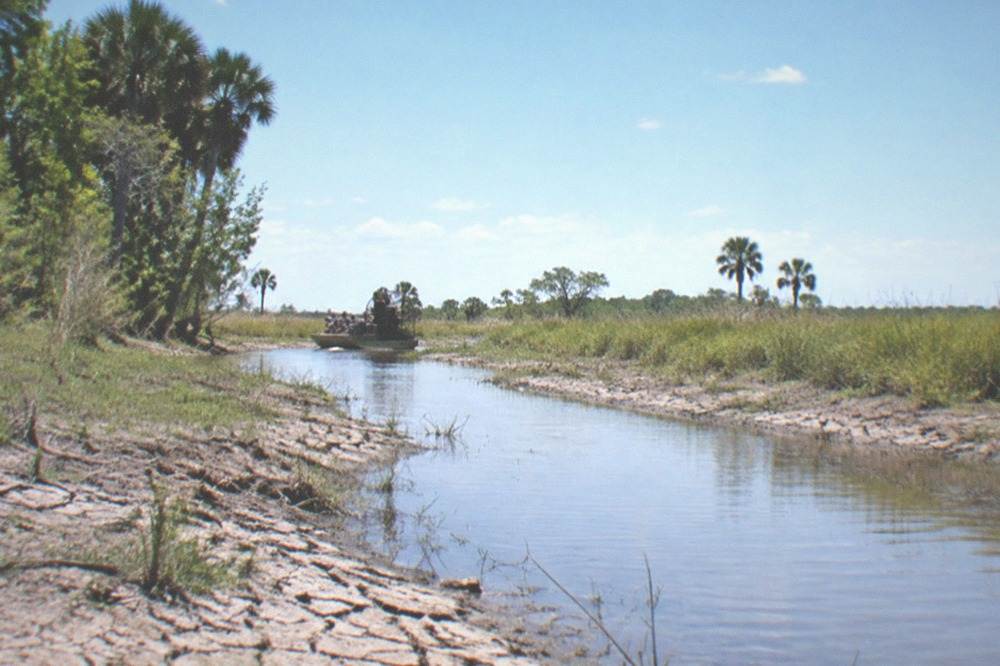
Wildlife viewing shifts with the water too. Lower water concentrates fish and the animals that eat them into smaller areas, which can genuinely improve sightings along deeper channels while making some shallow flats inaccessible. Alligator numbers in this chain are not in question: Lake Kissimmee's estimated 16,184 and Lake Toho's 5,716 come from FWC's own harvest-program data, which the commission's alligator harvest program page documents. Where those animals sit, and whether a given route can reach them, is the drought variable. Sightings remain common but are never guaranteed, which is every honest operator's own stated caveat, in dry years and wet ones.
The Boggy Creek one-hour airboat ride near Orlando runs from the southern end of this chain, and its long review record at 4.8 across 905 reviews spans drought years, flood years and ordinary ones. Long review pools are useful precisely for this: they tell you how an operator behaves across conditions, not just on a perfect February morning.
Which Airboat Tour Fits A Storm-Season Trip?
Match the tour to your weather tolerance rather than to a price point alone. Shorter rides minimize exposure to a forecast turning bad; morning departures beat afternoon ones in summer; park-included tickets give you a rainy-day fallback; and hotel-pickup tours trade drive risk for schedule risk. The roster's cheapest entry, Wild Florida at $37, includes park admission, which is the strongest hedge on a volatile-weather day.
Breaking that down by booking type, the honest version looks like this. A 30-minute ride is the lowest-commitment weather play: less boat time means less chance a cell moves in mid-ride, and if it gets cut, less is lost. A 90-minute wildlife ride is the highest-yield option on a stable morning, because the longer route reaches more habitat. A half-day with transport is the most schedule-dependent, since a pickup time fixed hours in advance cannot flex around a storm that forms at noon.
| Booking type | Weather flexibility | Best storm-season use |
|---|---|---|
| Short ride, self-drive | High; easy to rebook same day | First-timers, unstable forecasts |
| Longer wildlife ride | Medium; pick morning slots | Clear mornings after rain days |
| Park-included combo | High; park fills the gap | Families with kids |
| Half-day with hotel pickup | Lower; fixed pickup schedule | No-rental travelers |
The combo logic is worth dwelling on, because it is the one structural answer to storm variance that costs nothing extra. Wild Florida's airboat tour with Adventure Park admission and optional lunch wraps the boat ride inside a full park day at Kenansville. If the boat holds for 45 minutes waiting on a cell, you are standing in a gator park, not a parking lot. With 2,790 reviews at 4.8, it also has the deepest review pool on the entire roster, which is the kind of track record that tells you how cancellation days actually get handled in practice.
On the wildlife side, the Florida Everglades wildlife airboat tour at 4.7 from 352 reviews, from $67, is a 1.5-hour format aimed squarely at animal sightings, birds as much as gators. The reported bird list across these lakes and marshes includes bald eagles, sandhill cranes, great blue herons, snowy egrets, wood storks, ospreys, snail kites, roseate spoonbills, anhingas and ibis, and the eBird hotspot checklist for Lake Tohopekaliga tracks recent sightings directly. In the wet season, plan that ride for the earliest slot available.
One more honest note on timing across the season: hurricane season is six months, and they are not equal. June rides carry afternoon-storm risk and nesting-season caution. September sits at the statistical peak of basin activity and is the month to book with the most flexibility. Late October and November trend drier, cooler and calmer, and November rides often benefit from the first cool fronts, when alligators start hauling out onto banks to bask again. If your dates are movable within the window, the back edge of the season is quietly one of the better times on the calendar.
What Should You Do If A Storm Threatens Your Booked Date?
Watch the forecast over the launch point rather than your hotel, hold the booking until the operator's own cancellation call, and reschedule rather than default. Contact the operator early, because everyone on a cancelled departure competes for the same reopened slots, and bring ponchos, dry-bag storage for phones, and a change of shoes regardless of forecast. A storm on the radar is a reason to be flexible, not a reason to assume the day is lost.
The single most common mistake is cancelling yourself when the operator would have run. Central Florida's afternoon convection is local and fast-moving, and a morning that looks doomed on a 7-day forecast is routinely a clean, calm, rideable morning by the time you reach the dock. Wait for the operator's decision. Their cancellation is covered by their published policy; your voluntary no-show is not.
A short pre-departure checklist for storm-season ride days:
| Item | Why it matters |
|---|---|
| Radar over Southport Rd or Lake Cypress Rd | Weather is local; the dock decides |
| Operator's contact number saved | Rebooking after a cancellation is first-come |
| Poncho, not umbrella | Wind and open boat; hands stay free |
| Dry bag or ziplock for phone | Spray and sudden rain both happen |
| Water shoes or a spare pair | Wet decks and rainy parking lots |
If you want the timing science rather than the packing list, there is a deeper piece on choosing your departure window in best time of day for an airboat tour, and a wider weather question, whether you even get wet on these rides, is covered honestly in do you get wet on an airboat ride. For anyone weighing the whole trip around the season's fringe, the marsh and lake country that makes this corridor work is profiled in why Kissimmee is Central Florida's airboat capital.
The last planning item is lodging, and the honest answer is that there is no hotel next to the launch sites. No major property sits immediately adjacent to the Southport Park or Boggy Creek launch area; the site provides free on-site parking instead, and the nearest named lodging sits several miles out along the US-192 and Poinciana corridors. In storm season that distance is an argument for the pickup-included tours, and a reason to give yourself 45 minutes of drive margin on any self-drive morning booking.
Common Questions About Airboat Tours In Hurricane Season
Do airboat tours run during hurricane season in Florida?
Yes. Operators across the Kissimmee corridor run daily calendars through the June-through-November window, cancelling individual departures only for actual severe weather such as lightning, sustained storms or named-system impacts. On ordinary storm-free summer days the boats launch on schedule.
What happens if my airboat tour is cancelled for weather?
Boggy Creek states that any ride cancelled due to weather is refunded or rescheduled based on the customer's availability. Wild Florida allows a reschedule or full refund for severe-weather cancellations, with a standard 24-hour policy otherwise. Contact the operator promptly, because reopened slots after a cancelled day go first-come.
Is hurricane season a bad time to book an airboat tour?
It is a different time, not a bad one. Afternoon thunderstorms make same-day delays more likely, and July through September overlaps alligator nesting, when sightings take more patience. But mornings are consistently workable, wildlife is still active, and late October and November ride days often benefit from the first cool fronts.
How has the 2026 drought affected airboat routes?
Water levels across the Kissimmee chain have run below their regulation schedules since a February 2026 drought state of emergency, with the Kissimmee-Cypress-Hatchineha lakes roughly 2.5 feet below their deviation schedule. Airboats draft very little, so rides continue, but shallow marsh sections may be limited and wildlife concentrates into deeper channels.
Should I cancel my airboat tour if rain is in the forecast?
Not before the operator does. Central Florida's summer storms are local and fast-moving, and a rainy forecast at your hotel can mean clear water at the dock. The operator's own cancellation is covered by their weather policy; a voluntary no-show generally is not, so wait for their call.
Which airboat tour is the safest bet in storm season?
A morning departure on a short or park-included option. Wild Florida's tour includes gator park admission from $37 per person, so a delayed boat ride still leaves a full park day, and its 4.8 rating from 2,790 reviews reflects behavior across every kind of weather, not just calm ones.
Book Your Airboat Tour
Boggy Creek Airboat Adventures One-Hour Airboat Tour near Orlando, Florida
You've seen the real cancellation policies, the drought numbers and which tour hedges best against a storm. Check today's times for the one-hour Boggy Creek ride now, before the afternoon convection builds.
Or compare:
- Florida Everglades Airboat Tour and Wild Florida Admission with Optional Lunch from $37 per person
- Orlando: Florida Everglades Wildlife Airboat Tour from $67 per person