Gator Airboat Rides In Orlando: What You'll Actually See
Every airboat brochure in Central Florida shows a gator. Here is what the actual population data, seasonal patterns and tour listings say you are likely to see, and what nobody can promise.
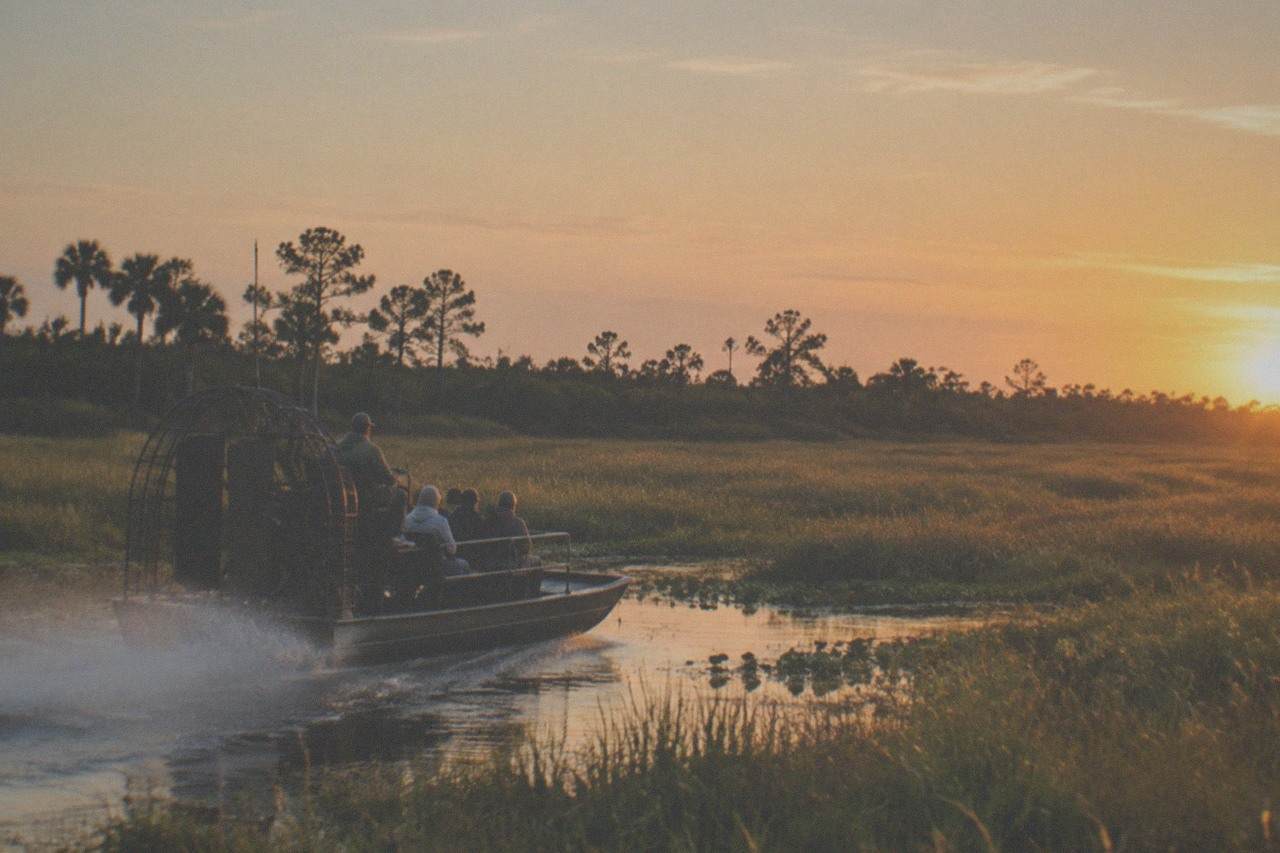
Short answer
Yes, Orlando has gator airboat rides, and the water behind them is genuinely loaded: FWC estimates about 16,184 alligators in Lake Kissimmee and about 5,716 in Lake Tohopekaliga. Rides run from $44 per person for 30 minutes. Sightings are common but no operator guarantees one.
The most direct gator ride on this roster is a 30-minute loop from $44 per person, rated 4.4 from 108 reviews. See today's times before you decide if a longer format suits you better.
See Today's Times For The 30-Minute Ride → Compare every tour
Nobody sells an airboat tour without an alligator on the marketing. The photo is always the same: a big reptile on a bank, mouth open, camera close. What the photo never tells you is how many alligators live on the lake you will actually ride, which months they spend basking in plain view, and which months they spend submerged in the shade. This guide separates the brochure from the biology, using real population figures from the Florida Fish and Wildlife Conservation Commission and the real listings from the operators around Kissimmee.
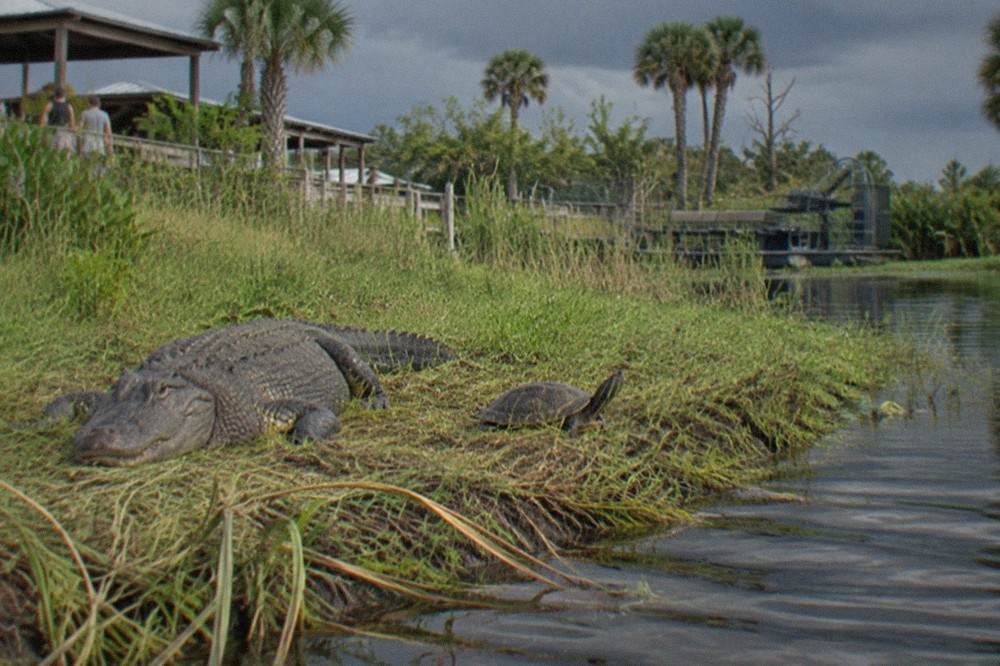
The short version: the lakes behind Orlando's airboat industry hold a lot of alligators, the dry half of the year is when you see them, and every honest operator tells you sightings are never guaranteed. The rest of this page gives you the numbers behind each of those three claims.
Are There Gator Tours In Orlando?
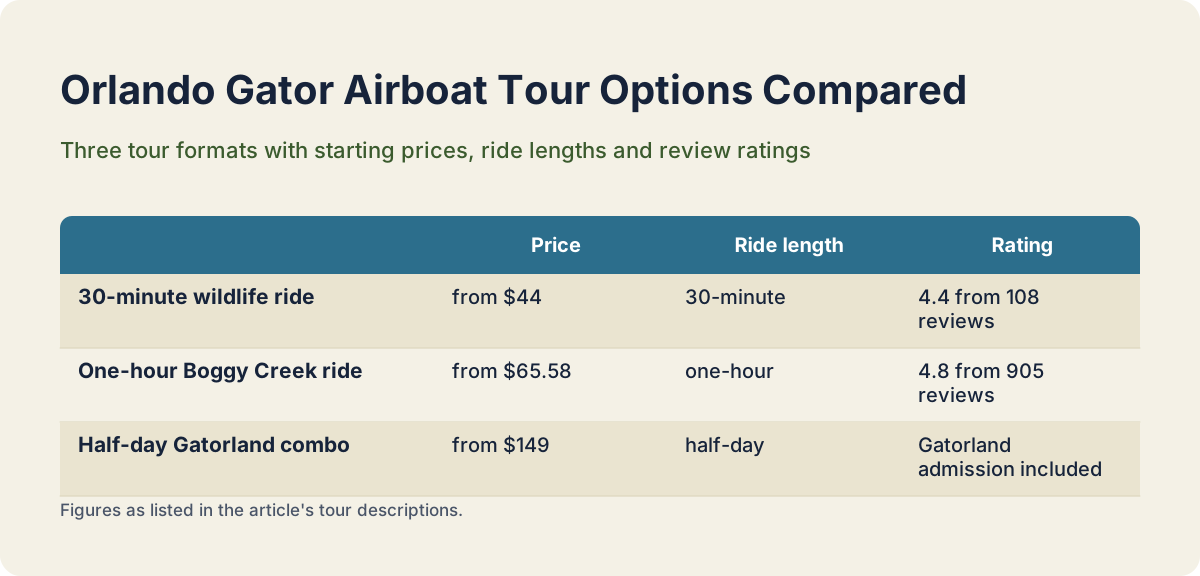
Yes, several. The Orlando area runs dedicated gator-viewing airboat tours across three formats: a 30-minute wildlife ride from $44 per person rated 4.4 from 108 reviews, a one-hour ride from $65.58 rated 4.8 from 905 reviews, and a half-day combo with hotel pickup and Gatorland admission from $149. All three put you on water with a documented wild alligator population.
The most direct wildlife option is the 30-minute Orlando airboat tour with alligator and wildlife viewing, which is also the shortest and most budget-friendly gator ride in this lineup at from $44 per person. It is built around exactly the thing you are searching for: a fast loop through marsh water where alligators, turtles and wading birds are the whole point, not a side effect. At 30 minutes it fits easily between a morning at the parks and an afternoon by the pool, which is why it pulls a steady 4.4 from 108 reviews.
If you want more time on the water, the Boggy Creek one-hour airboat tour near Orlando doubles the ride for from $65.58 per person and carries the deepest review pool of the shorter rides at 4.8 from 905 reviews. Boggy Creek departs from 2001 E Southport Rd in Kissimmee, on the edge of the Lake Tohopekaliga marsh system, and the listing includes park admission, an alligator viewing area, hearing protection and life vests.
The third format is the airboat tour with Gatorland and hotel pickup from $149 per person, a half-day that pairs a 30-minute airboat ride with admission to Gatorland and round-trip transport from your hotel. It answers a different question: not "will I see a gator on the water" but "can I see wild gators and then walk among hundreds more in one morning." Its review pool is small at 4.6 from 15 reviews, so treat the rating as thin evidence rather than a verdict.
How Many Alligators Actually Live In These Lakes?
FWC harvest-program data puts Lake Kissimmee at roughly 16,184 alligators, the second-highest count of any lake in Florida behind Lake Okeechobee. Lake Tohopekaliga, the lake most Orlando rides launch beside, carries an estimated 5,716. Statewide, Florida holds about 1.3 million alligators across suitable habitat.
Those are not tourism-board numbers. They come from the state's alligator harvest program, which counts and manages the population, and they matter because they explain why airboat routes cluster where they do. Operators launch beside the Lake Toho and Lake Kissimmee marshes because that is where the animals are. You can read the source data yourself through the FWC alligator harvest program page, which publishes the population summaries behind these estimates.
Two caveats keep this honest. A lake-level estimate covers the entire water body, including coves, canals and back marshes your one-hour ride never enters, so a high lake number does not mean a gator every fifty feet. And alligators move: they follow water temperature, food and water level, so the stretch that held a dozen animals last month may hold three this month.
| Water body | Estimated alligators | Rank / context |
|---|---|---|
| Lake Okeechobee | Highest count of any Florida lake | State's top lake by population |
| Lake Kissimmee | About 16,184 | Second-highest of any Florida lake |
| Lake Tohopekaliga (Toho) | About 5,716 | Launch lake for most Orlando-area rides |
| Florida statewide | About 1.3 million | Across all suitable habitat |
The Toho number deserves a second look, because it is the one that actually applies to most rides sold as "Orlando" airboat tours. Five thousand alligators on a single lake sounds saturated, and in the cooler months it can feel that way from the boat. In July, the same lake can feel empty, which brings us to season.
What Time Of Year Gives The Best Gator Sightings?
Dry, cooler months, roughly November through April, are when operators and biologists agree sightings are most reliable. Alligators are ectothermic: in mild air they haul out on banks to warm up, in hot weather they sink into shade and water. Summer, especially the July through September nesting window, is the hardest season to spot them.
The mechanism is simple and worth understanding, because it changes how you plan. An alligator's body temperature tracks its surroundings. When the air is in the 60s and 70s Fahrenheit, lying on a sunny bank is the efficient move, so the animal parks itself in open view. When the air is in the 90s, the water is the cool place, so the animal submerges, and a submerged alligator on a dark lake is functionally invisible from a moving airboat. Operators around the Kissimmee marshes consistently point to winter and early spring as their strongest viewing season.
| Period | Alligator behavior | What it means on the boat |
|---|---|---|
| November to April | Extended basking on banks in mild air | Most reliable sightings; animals in open view |
| May to June | Warming water, animals dispersing | Sighting quality drops, still frequent |
| July to September | Nesting season; females stay near nests, shaded cover | Hardest spotting; more submerged time |
| October | Cooling begins, basking returns | Transition month; improving again |
The dry half of the year has a second effect that works in your favor. Florida's dry season lowers water levels, and lower water concentrates animals along remaining channels and shorelines instead of scattering them across flooded marsh. There is a real drought angle here too: a state of emergency was declared in February 2026 after sustained dry conditions, and by mid-2026 the Kissimmee chain ran below its water regulation schedule, with East Lake Toho roughly 1.4 feet low and Lake Toho roughly 1.0 foot low. Shallow water restricts which routes a captain can run, but the same concentration effect that makes normal dry seasons good for viewing makes drought years, oddly, decent for it too.
Season planning also interacts with what you wear and how you book, and the what to wear on an Orlando airboat ride guide covers the winter-layering side of that equation in detail.
What Time Of Day Should You Book A Gator Ride?
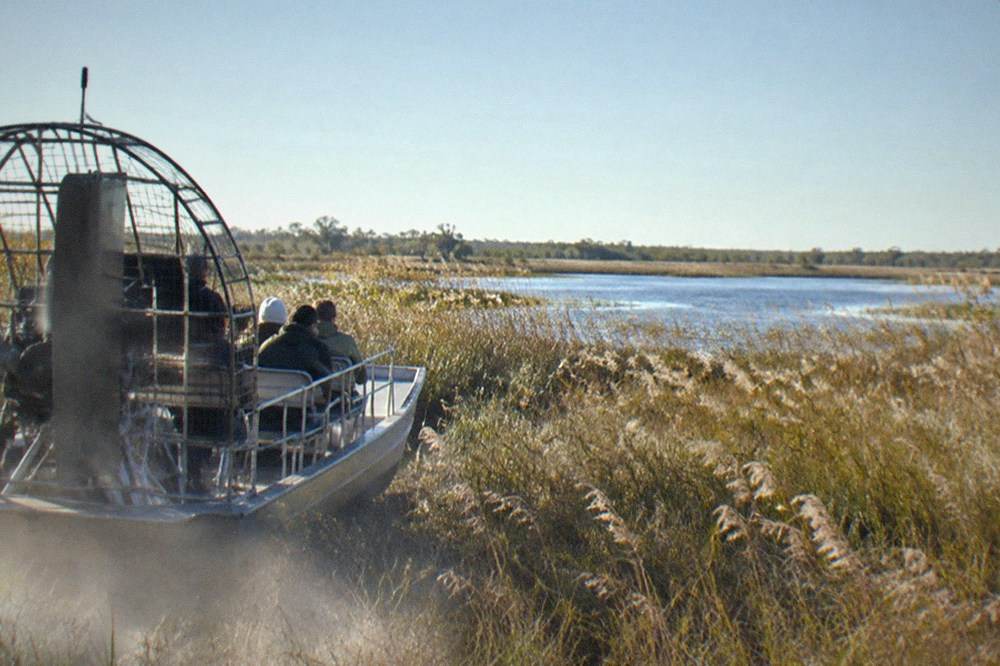
Morning, before roughly 10 or 11 a.m., is the window operators recommend most often for wildlife activity and calmer weather. Sunset is the second-best slot, catching the transition between day and night species. Midday rides are the cheapest on comfort and the weakest on sightings, especially in summer.
The morning logic mirrors the seasonal logic. After a cool night, alligators head for sunny banks to warm up, and the first hours of daylight are when basking peaks. Birds feed hardest in the same window, so a 9 a.m. departure typically gets you both. There is a practical bonus: Florida's afternoon thunderstorms build through the day in summer, so an early slot is also your best odds of riding at all rather than waiting out a delay on the dock.
If a morning slot fits your itinerary, the short 30-minute gator and wildlife airboat ride is a natural fit: it is brief enough to slot before lunch, cheap enough to treat as one item in a packed day, and its route is aimed squarely at the marsh edges where basking animals hold in the early hours.
Sunset is the connoisseur's slot. The golden-hour light on the marsh is genuinely good, and the hour between day and night wildlife brings a shift in who is out: herons and egrets settling, the first bats and night herons appearing, alligators sliding back into feeding mode as the heat breaks. If the idea of that window appeals to you, the best time of day for an airboat tour guide breaks the full day into slots, and the night airboat tours in Orlando guide covers what changes after dark, when you hunt eyeshine with a spotlight.
Whatever slot you pick, book the longest ride your budget allows. A 30-minute loop is a taste; a 60- or 90-minute ride lets the captain work a route, and the extra minutes on the water are the single cheapest upgrade to your sighting odds that money can buy.
What Wildlife Will You See Besides Alligators?
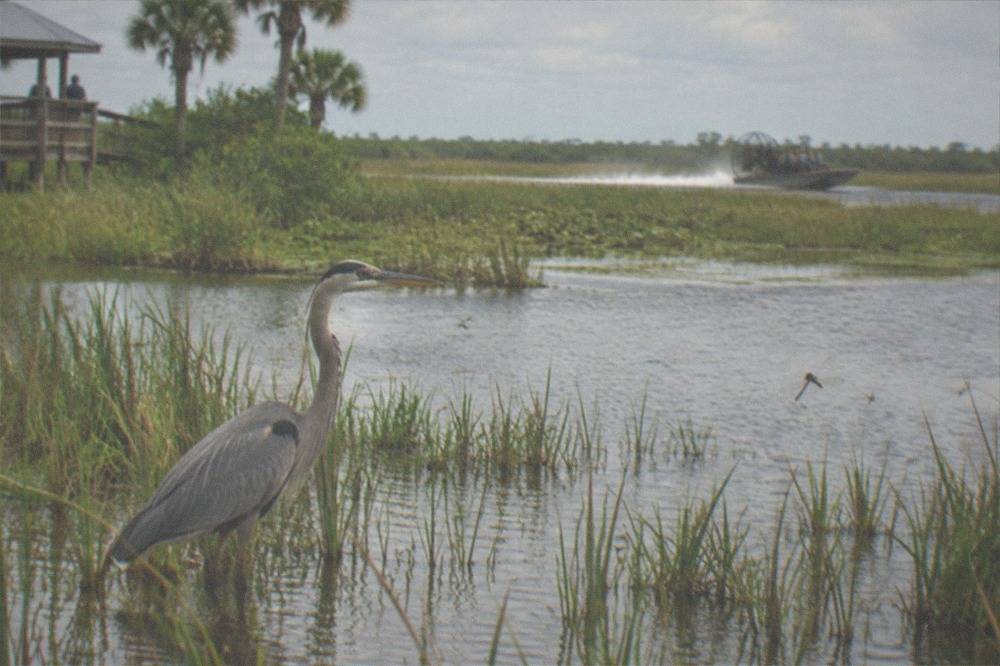
The lakes and marshes around these rides carry a documented bird list that includes bald eagles, sandhill cranes, great blue herons, snowy egrets, wood storks, osprey, snail kites, roseate spoonbills, anhingas and ibis. Turtles, and in some spots wild pigs and deer, round out the usual cast. Birds are often the most reliable sighting of the day, more so than the gators.
Birders figured out what tourists are still learning: the Lake Tohopekaliga marsh system is a genuinely good birding hotspot, tracked species by species on the eBird hotspot checklist for Lake Tohopekaliga. A captain who is steering you toward alligator banks is steering you through the same habitat herons and egrets feed in, so the bird list arrives whether or not anyone planned for it. Local operators note that this stretch of Florida supports one of the larger bald eagle populations you will find anywhere, and eagle sightings on rides are routine rather than remarkable.
| Species | How often seen from the boat | Where to look |
|---|---|---|
| Great blue heron | Almost every ride | Shoreline shallows, standing still |
| Snowy egret | Almost every ride | Shallows near grass lines |
| Osprey | Frequent | Overhead, often carrying fish |
| Bald eagle | Frequent in the area | Tall snags and channel markers |
| Sandhill crane | Common in adjacent wet pasture | Grass flats near the launch |
| Roseate spoonbill | Occasional | Shallow feeding flats |
| Snail kite | Occasional, notable | Apple snail habitat along marsh edges |
| Wood stork | Occasional | Mudbanks and shallows |
The wildlife-viewing ride in this lineup makes the broader cast its selling point, not just the gators. The alligator and wildlife viewing airboat tour is marketed as exactly that loop through marsh habitat, and reviewers on the listing talk up the birds roughly as often as the reptiles. Set your expectations the way a birder would: alligators are the headline, but the supporting cast is what fills the ride when the headliner stays under water.
Do Any Tours Guarantee You'll See A Gator?
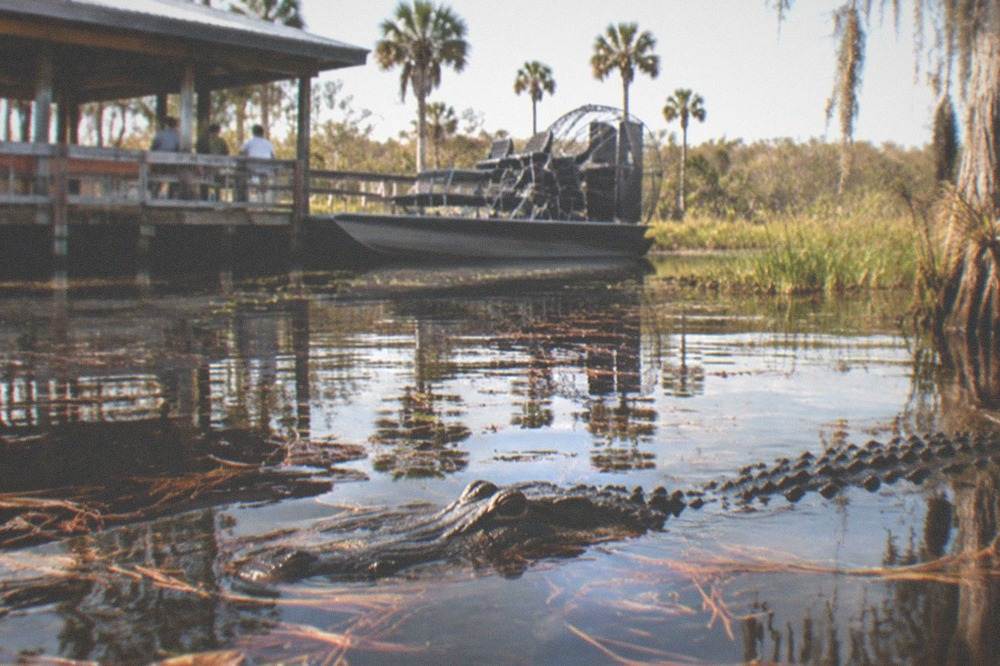
No. Every operator in this market states plainly that alligators are wild animals and sightings cannot be guaranteed, and no operator publishes a sighting percentage. Any listing that promises a gator is promising something the biology does not support. What you are actually buying is access to water with a documented population in the thousands.
That is not a dodge, it is the industry's honest position, and it is consistent from the biggest operators down to the smallest. Alligators move with water temperature, food and mood. A lake holding an estimated 16,184 of them still has days when the stretch you ride looks empty, and a captain cannot order a wild reptile onto a bank. The good operators do everything around the problem: they read the season, run the routes holding the most basking animals, and tell you honestly on the dock what the last few days have looked like.
If a guaranteed gator matters more to you than a wild one, the combo format solves it differently: the half-day airboat and Gatorland tour from Orlando pairs the wild marsh ride with a walk through a park holding hundreds of alligators on site, so the second half of your day comes with a 100 percent sighting rate of the captive kind. Some visitors prefer exactly that trade, and there is no shame in it. Others find the wild sighting is worth the uncertainty, precisely because nothing was promised.
What Does A Gator Airboat Ride Actually Cost?
The three gator-focused formats in this lineup run from $44 per person for a 30-minute wildlife ride, $65.58 for the one-hour Boggy Creek ride, and $149 for the half-day with airboat, Gatorland admission and round-trip hotel transport. Longer rides and included transport are what move the price, not the gators.
The price ladder maps cleanly onto time and logistics. The 30-minute tour is the cheapest entry point and the one to pick if the gator ride is one item on a packed itinerary. The one-hour ride is the value pick for most visitors: it roughly doubles the water time for about 50 percent more money, and the deeper review pool behind it, 4.8 from 905 reviews, gives you a better sense of what you are buying than a thinner listing can. The half-day combo costs the most because you are buying a driver's time and a park ticket along with the airboat.
| Tour | Format | From price | Rating and reviews |
|---|---|---|---|
| Orlando airboat tour with alligator and wildlife viewing | 30-minute daytime ride | $44 per person | 4.4 from 108 reviews |
| Boggy Creek one-hour airboat tour | 1-hour daytime ride | $65.58 per person | 4.8 from 905 reviews |
| Airboat tour with Gatorland and hotel pickup | Half-day combo with transport | $149 per person | 4.6 from 15 reviews |
For the middle rung, the one-hour Boggy Creek gator ride is the one most first-time visitors end up happiest with, and its free cancellation makes it a low-risk booking to make early in your trip planning.
Two budget notes beyond the ticket. The Boggy Creek listing includes park admission, hearing protection and life vests, so there is no surprise add-on at the dock, and it carries free cancellation. The combo's hotel pickup means you skip a rental car day or a 40-minute drive each way; the launch area sits roughly 30 to 31 miles from Orlando International Airport, about 40 minutes by road. If you are weighing the full cost picture across every operator in the market, the Orlando airboat tour prices guide breaks down the wider field.
Which Gator Ride Fits Your Trip?
Pick the 30-minute wildlife ride for a short, budget gator fix between park days, the one-hour Boggy Creek ride for the best balance of time, price and review depth, and the half-day Gatorland combo when you have no car, have kids, or want a guaranteed reptile in the same morning. Families with small children should read each operator's own life-jacket policy before booking.
The decision mostly comes down to three questions. How much time do you have? Do you have a car? And is a wild sighting the point, or is seeing alligators at any confidence the point? Answer those and the choice makes itself.
If you are traveling with children, note that policies differ by operator and are worth checking on the live listing before you book: Boggy Creek sets no minimum age and requires a provided life jacket for children under 6, while the state's rules on life jackets and hearing protection are a matter of each operator's practice rather than a blanket law. The airboat tours with kids in Orlando guide walks through the age and jacket rules operator by operator, and it is the one piece of homework that genuinely changes which ride you should pick.
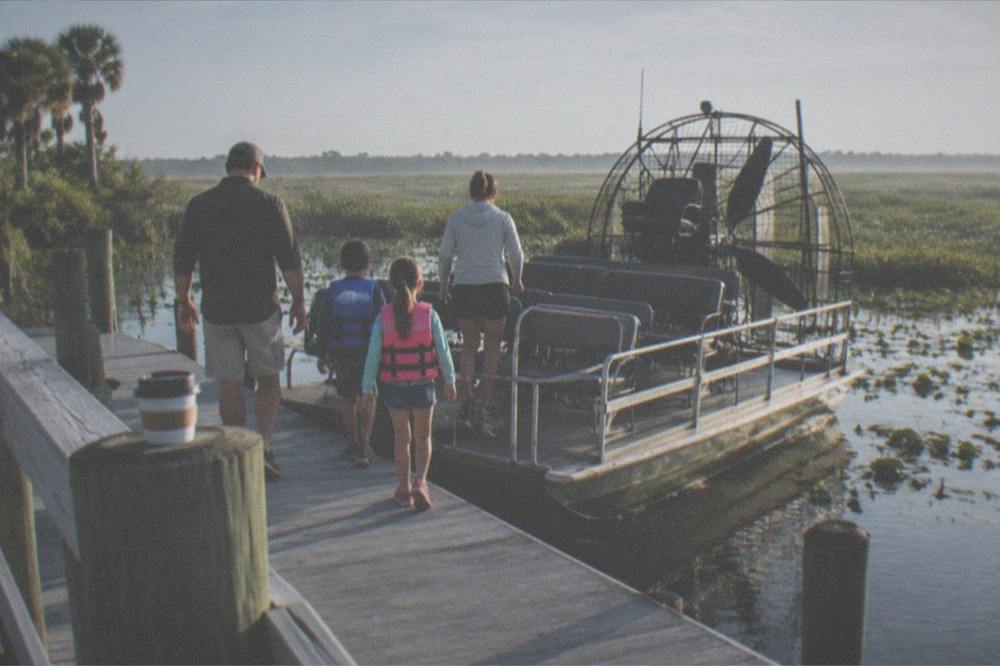
One last piece of context that surprises first-time visitors: almost none of these rides happen in Orlando proper. The launch points sit in the Kissimmee and Osceola County marsh corridor, on the Kissimmee River valley wetlands, a distinct geography from Orlando's Orange County urban core, and Orlando Airboat Tours covers that whole corridor rather than the city limits of the name. If your base is a theme-park hotel, the drive to the gator water is about 35 minutes from the Walt Disney World area, which is closer than most guests expect.
Common Questions About Gator Airboat Rides In Orlando
Are there gator tours in Orlando?
Yes. The area runs dedicated gator-viewing airboat tours in three formats: a 30-minute wildlife ride from $44 per person, a one-hour Boggy Creek ride from $65.58, and a half-day combo with Gatorland admission and hotel pickup from $149. All three ride water with a documented wild alligator population.
How many alligators are in Lake Kissimmee?
FWC estimates about 16,184 alligators in Lake Kissimmee, the second-highest count of any Florida lake behind Lake Okeechobee. Lake Tohopekaliga, the launch lake for most Orlando-area rides, holds an estimated 5,716.
Is there a best month to see alligators on an airboat tour?
Dry, cooler months, roughly November through April, are the most reliable. Alligators bask on banks in mild air and submerge in the heat of summer, so winter and early spring put the most animals in open view.
Do airboat tours guarantee alligator sightings?
No operator in this market guarantees a sighting, and none publishes a sighting percentage. Sightings on populated lakes are common, but the animals are wild and mobile. A combo tour with Gatorland is the way to add a guaranteed reptile to the same day.
What other animals will I see on the ride?
Bald eagles, sandhill cranes, great blue herons, snowy egrets, wood storks, osprey, snail kites, roseate spoonbills, anhingas and ibis are all reported on these marshes, along with turtles and the occasional deer or wild pig on the banks. Birds are frequently the most consistent sighting of the day.
What is the cheapest gator airboat ride near Orlando?
The 30-minute airboat tour with alligator and wildlife viewing starts at $44 per person, the lowest per-person price among the gator-focused rides in this lineup.
Book Your Airboat Tour
Orlando Airboat Tour with Alligator & Wildlife Viewing
You've seen the real alligator counts, the honest sighting odds and what each format actually costs. Check today's times for the 30-minute ride now, before the morning slots fill.
Estimate your total (uses Orlando Airboat Tour with Alligator & Wildlife Viewing's listed from-price of $44 per person)
Estimated total: $0 (verify the exact total, including any child price, on the live listing before booking)
Or compare:
- Boggy Creek Airboat Adventures One-Hour Airboat Tour near Orlando, Florida from $65.58 per person
- From Orlando: Airboat Tour & Gatorland with Hotel Pickup from $149 per person